Sunday, November 11, 2012

Scientists Solve Mystery of Earth's Shifting Poles

Copyright ? 2012 National Public Radio. For personal, noncommercial use only. See Terms of Use. For other uses, prior permission required.

FLORA LICHTMAN, HOST:

You may have heard of Earth's tectonic plates, you know, the pieces of mantle and crust that slide around, breaking continents and kind of - and smooshing them together. But did you know that Earth's entire solid exterior can move, too?

OK, imagine this. Imagine the globe, and now take the surface of the planet and rotate it in your mind so that Boston is at the equator. Whoa. Some scientists think that a shift of this actually happened about 800 million years ago. So should we expect tropical water in Boston again anytime soon? Don't get rid of that parka yet.

A new study published in the journal Nature, though, may help explain what causes this colossal slip and slide, and that's what we're talking about next. If you have questions about this, give us a call. Our number is 1-800-989-TALK, 1-800-989-8255. Let me introduce my guest.

Adam Maloof is an associate professor of geosciences at Princeton University in New Jersey. Welcome to the show.

ADAM MALOOF: Thanks. Thanks for having me.

LICHTMAN: Let's talk about the terminology first. We're not talking about the magnetic poles, right?

MALOOF: Right. The magnetic pole is not moving, here. The magnetic pole stays aligned with the spin axis, and they should be unchanging as viewed from space.

LICHTMAN: OK. So what are we talking about?

MALOOF: We're talking about the rest of the Earth: the crust, the rest of the lithosphere and the entire mantle sliding over the outer core. So the way you imagine this is the core of the Earth, the outer part, is actually fluid iron, and it has about the viscosity of water. So we're literally sliding, you know, 2,700 kilometers of mantle over this so that, as perceived from space, what you'd see is the spin axis is staying the same, but all the continents are moving together to a new location.

LICHTMAN: Is this happening now?

MALOOF: This is happening now, in fact. It's happening at about 10 centimeters per year, which is slightly faster than that tectonic mashing of plates that you describe, maybe a little faster than your fingernail grows.

(LAUGHTER)

LICHTMAN: That's a good way to put it. So you've got this sliding going on, and then on top of that, different sliding of the tectonic plates.

MALOOF: Yup, exactly.

LICHTMAN: OK. OK. And what's driving the movement?

MALOOF: Well, the movement that's happening today - and actually any kind of true polar wander, or this motion of whole, solid Earth - is driven by redistributions of mass. So the way to think about it is you have a rotating body, and any rotating body will want to adjust to maintain equilibrium, so that any excess mass is located in the equator, and any mass deficiencies are aligned with the spin axis.

So, for example, today, as glaciers melt and atmosphere moves, some places get extra mass. Some places get less, and the Earth will always be adjusting so that any mass excesses get pushed towards the equator.

LICHTMAN: We've got a bulge in our belly region of the Earth.

MALOOF: Yeah. So that bulge, that's there just because the Earth rotates. The fact that Earth deforms and rotates means that - it raises a bulge called the equatorial bulge about 20 kilometers in amplitude. It's actually quite large.

LICHTMAN: And, I mean, this is partly what keeps us stable, too, right?

MALOOF: Exactly. It's the main stabilizing effect, certainly on short timescales. It's also what sticks out into the solar system and is torqued by other planets, like the moon and stuff, and cause the Earth to wobble.

LICHTMAN: Why doesn't that - why does that move the whole surface of the planet?

MALOOF: Well, what you should imagine is this, is that on long timescales, that bulge will actually deform, OK. We can actually observe this deformation because, for example, as the glaciers melt, the solid Earth rebounds beneath them. And we can measure how fast the Earth is rising, and that's the same kind of deformation.

So when true polar wander occurs, this wholesale motion of all the continents, what literally has to happen is you have to push the full thickness of mantle through a standing wave, through this 20-kilometer bulge. So the time it takes to push yourself through this big wave is about how fast you can move all the continents around.

LICHTMAN: I feel like - let me just make sure I understand. What's causing the Earth's surface to move in one direction and not the other?

MALOOF: Really just where you end up with mass excesses and deficiencies.

LICHTMAN: OK.

MALOOF: So, for example, on a large scale today, let's say you were to remove a ton of mass in the form of ice and place it into the oceans as water.

LICHTMAN: OK.

MALOOF: And generally, you're moving masses away from poles and towards the equator, then the Earth rebounds. So the Earth starts to move back towards the poles to replace that excess mass. This is a kind of mass redistribution.

Now, what's important 800 million years ago, and what was described in this recent paper by J.C. Creveling, et al, is that there, we're talking about much, much larger masses. We're talking probably about things moving around in the mantle, such as subducting plates of oceanic lithosphere or rising plumes. And these very, very large-scale changes in the distribution of mass would be driving these much larger-scale true polar wander events.

LICHTMAN: We're going to talk about that more when we come back from this break. Adam Maloof is the associate professor of geosciences at Princeton University. And if you have questions about this bizarre phenomenon - I had never heard of it before - call us: 1-800-989-8255, 1-800-989-TALK is our number. More on true polar wander when we come back.

(SOUNDBITE OF MUSIC)

LICHTMAN: This is SCIENCE FRIDAY, from NPR.

(SOUNDBITE OF MUSIC)

LICHTMAN: This is SCIENCE FRIDAY, and I'm Flora Lichtman. We're talking this hour about Earth's wandering poles. Apparently, they don't stay in the same place. My guest is Adam Maloof. He's an associate professor of geosciences at Princeton University.

And before the break, you were telling us that - about this huge, colossal slip and slide that happened 800 million years ago.

MALOOF: That's right. About 800 million years ago, we were actually looking at sedimentary rocks in Svalbard and Australia, two - today - opposite sides of the Earth, where we saw evidence that Earth seemed to have a shift in the poles relative to the continents on the order of 40 to 50 degrees.

And what was particularly bizarre about this shift is that it was a there-and-back-again motion. It seemed to rotate one way, and then rotate back.

LICHTMAN: And where did it rotate? Give us a sense. I mean, I know that the continents didn't look like they do now. But where would we be?

(LAUGHTER)

MALOOF: Yeah, well, if you were to imagine - so today, Earth's shape is not quite right to undergo this kind of true polar wander. But for the sake of a thought experiment, if it were, what you could imagine is if you were far away from the true polar wander axis, you'd essentially change 50 degrees in latitude. So, like, you open the show, you'd say Boston would end up on the equator.

If, on the other hand, you were very close to the true polar wander axis - in other words, the axis around which all this rotation is going on - you'd end up just spinning around. So if that was - if, for example, you were in, say, the - I don't know, somewhere in the tropics, say, the Bahamas, and this happened, you would literally - your shoreline would just rotate around 50 degrees. You might be facing north instead of east.

LICHTMAN: How fast did this happen?

MALOOF: Well, our time constraints are not very good, but based on what we can say, we're guessing somewhere between 10 and 20 million years.

LICHTMAN: How much is that a day?

MALOOF: Yeah. Per day, on the order of, say, 50 centimeters. So, for a geologist, this is extremely fast, believe it or not. Right?

(LAUGHTER)

MALOOF: And, you know, when we talk about plate tectonics, we talk about the fastest plates moving on the order of five centimeters today. So it's almost an order of magnitude faster, which is a big deal for geologists.

LICHTMAN: You talked about the Earth being ripe for that kind of movement at that time. What gives you that condition?

MALOOF: Well, one way to ripen the Earth would be to....

(LAUGHTER)

LICHTMAN: So to speak.

MALOOF: ...to change its shape. And so you talked earlier in the show about today the shape, as seen from space, is completely dominated by this rotational bulge, the 20-kilometer thing around the equator. If you assume that on long timescales that bulge isn't too important for stabilizing the Earth and just look at what's called the non-hydrostatic geode, the shape the Earth would have if it weren't rotating, today it's what we'd say is triaxial.

You could make three axes, all of which are slightly different in length. If, on the other hand, the Earth were more football-shaped, such that it had one long axis in the equatorial plane, but the other two axes were similar, then the Earth might have a propensity to spiral, just like a football, and that spiraling action could achieve these 30, 40, 50-degree rotations.

LICHTMAN: Well, what caused it to move back?

MALOOF: Yeah. So that's the really elegant innovation of this new paper that came out in Nature by J.C. Creveling, et al. And what they argued is that - so, in addition to all these forces we've described, Earth's lithosphere, this part of the Earth that takes part in plate tectonics and divides the Earth into all these different plates, has some elasticity to it. It doesn't just behave like a fluid.

And because of that, it basically records or sets in the aspect of Earth's rotational bulge so that if forces within the Earth, or redistributions of mass were to cause a 50-degree rotation, and then those loads would relax, the original rotational bulge would still be kind of in memory within this elastic lithosphere, and that would literally cause the Earth to rotate back where it came from.

LICHTMAN: I'm imagining rubber bands.

MALOOF: Yeah. You should think of it just like rubber bands. It's a little bit tricky, right, because Earth's surface, while individual plates are clearly elastic, they're broken. And so a lot of people originally had the intuition that these broken plates would all just kind of move up and down and not behave too elastically.

But it turns out, as this paper shows, even the tiniest bit of elastic strength or elastic thickness will cause the Earth to behave this way and have a memory of its earlier rotational bulge.

LICHTMAN: Let's go to the phones. Will in Pittsburgh, do you have a question?

WILL: Yeah, I do have a question. My question revolves around raw resources and the movement of raw resources from continent to continent and all the disparity between resources between Asia and America. So how would that affect the rotation of the Earth with this shift you're talking about?

LICHTMAN: The raw materials.

MALOOF: OK. I don't know exactly how to answer this question, but I can say that - and I'm not sure exactly what raw materials you're referring to, but, for example, one thing that does happen - if the poles are to shift - is that you move landscapes into very different climate zones.

For example, just say you were to imagine what would happen today, you'd move continents like Antarctica towards the equator. So suddenly, large ice sheets would melt and expose previously unknown continents to view. And so perhaps resources that were otherwise unknown would be there.

LICHTMAN: I think we have a caller with sort of a question on this exact topic, Allison from Wichita. Do you have a question?

ALLISON: Hi. I just wondered: Do the poles' movement - excuse me. Do the poles' movement around - on the Earth, do they affect climate? And is this anything like climate change, what we're experiencing today? Is there any reason for that?

MALOOF: Excellent question. So first, let me just get it straight, that remember, this process is slow. So it - pole shifting would definitely have an impact on climate in two ways, which I'll explain in a second. But today, their impact is so slow on a human timescale, it would be imperceptible. But if you turn on your geologist eyes and imagine a timescale of millions of years, it has two very important effects on climate.

Regionally, as you might imagine, if you moved Boston to the equator, Boston would become warmer. So you'd have a local climatic change. But in some ways, more importantly, pole shifting can actually cause global climate change. And here's just one example of how it does so.

By redistributing the continents on the surface of the Earth, you change the global albedo - in other words you change how reflective the Earth is, because you change the percent of continental land masses in different equatorial zones. For example, the more equatorial continents you have, the more reflective the Earth is and the cooler it will get.

Likewise, you redirect ocean currents and completely change the way the ocean circulates and where is warm and where is cold. So pole shifting definitely has impacts both on local and global climate. It's just that the timescale is much beyond the human timescale.

LICHTMAN: Thanks, Allison.

ALLISON: Thank you.

LICHTMAN: I'm going to look through my geologist glasses into the far future. Will the Earth ever be ripened up for this again?

MALOOF: OK, that's an excellent question, and I would say there's two aspects to consider. One, strictly speaking, we think that the ripening and un-ripening essentially is a process driven by plate tectonics itself. So it's kind of a big, circular thing. But, basically, where you have subduction zones and where you have continents - say, supercontinents versus fragmented continents - that really sets the geometry for convection in the mantle, which itself sets the shape of the Earth.

So, presumably, when the continents come back together into the next great supercontinent, we may very well have the right geometry for another set of true polar wander events. That said, our mantle and our Earth itself is always evolving, and one of the most important terms that's evolving is its temperature.

Ever since Earth has formed, the Earth has been cooling, and as it cools, that changes how fluid the mantle is. And this will affect how easily a true polar wander event could occur and how large it might be.

LICHTMAN: Always hard to predict the future.

MALOOF: Yeah, no kidding.

(LAUGHTER)

LICHTMAN: Adam, thanks for joining us today.

MALOOF: Oh, thanks for having me. That was fun.

LICHTMAN: Adam Maloof is associate professor of geosciences at Princeton University in New Jersey.

Copyright ? 2012 National Public Radio. All rights reserved. No quotes from the materials contained herein may be used in any media without attribution to National Public Radio. This transcript is provided for personal, noncommercial use only, pursuant to our Terms of Use. Any other use requires NPR's prior permission. Visit our permissions page for further information.

NPR transcripts are created on a rush deadline by a contractor for NPR, and accuracy and availability may vary. This text may not be in its final form and may be updated or revised in the future. Please be aware that the authoritative record of NPR's programming is the audio.

Source: http://www.npr.org/2012/11/09/164797147/scientists-solve-mystery-of-earths-shifting-poles?ft=1&f=1007

russell westbrook horsetail falls ice t downton abbey new york knicks president day lin

Saturday, November 10, 2012

Veteran Organizations Join Forces to Respond to Hurricane Sandy

This Sunday, Veterans Day, hundreds of military veterans from across the country will descend on New York City to help rebuild communities devastated by Hurricane Sandy.

New York City, New York (PRWEB) November 10, 2012

This Sunday, Veterans Day, hundreds of military veterans from across the country will descend on New York City to help rebuild communities devastated by Hurricane Sandy. Working street by street, home by home, these veterans will lead relief efforts in the hardest hit areas of Rockaway Beach, NY. Throughout the day, they will conduct debris clearing, home repair, and post-disaster damage assessments for victims of the storm.

Military veterans chose to serve in part because of the desire to dedicate themselves to a cause larger than their own and that desire for service does not stop when they take off the uniform. The aftermath of Hurricane Sandy presents veterans with an opportunity to continue to serve while employing the skills they learned in the military.

?These men and women are uniquely qualified and motivated to step up and make a positive impact in our country--especially in times when fellow Americans are in deep need,? said Mike Erwin, Army Major, Founder and Executive Director of Team Red, White, & Blue. Skills such as decisive leadership, teamwork, risk mitigation, and emergency medicine make military veterans uniquely qualified for disaster response.

?When our country needs us, veterans respond. And whether we are fighting overseas or serving alongside our neighbors here at home, the country knows that they can count on veterans, because our mission continues,? said Eric Grietens, Navy SEAL, Founder and CEO of The Mission Continues.

The country?s leading veteran service organizations are joining forces for this important service project. While Team Rubicon, a veteran-led disaster response organization, is planning and organizing the event, each veteran service organization will mobilize and deploy its own volunteers.

?Though the organizations involved in this event have varying areas of focus; Sandy has made us realize what we all have in common: the desire to serve,? said Peter Meijer, Member of the Board of Directors, Student Veterans of America.

Participating in this day of service is Team Rubicon, Give an Hour, The 6th Branch, The Mission Continues, the Pat Tillman Foundation, the Headstrong Project, Got Your 6, Student Veterans of America, and Team Red, White, & Blue.

###

About Team Rubicon:


Team Rubicon (TR) unites the skills and experience of military veterans with first responders to rapidly deploy emergency response teams into crisis situations. TR offers veterans a chance to continue their service by helping and empowering those afflicted by disasters, and also themselves. For more about Team Rubicon, visit http://www.teamrubiconusa.org.

About Give an Hour:


Give an Hour is a nonprofit 501(c)(3), founded in September 2005 by Dr. Barbara Van Dahlen, a psychologist in the Washington, D.C., area. The organization is dedicated to meeting the mental health needs of military personnel, their families, and the communities affected by the ongoing conflicts in Iraq and Afghanistan. As of August 2012, Give an Hour has approximately 6,500 providers across the nation?in all 50 states, D.C., Puerto Rico, and Guam?with more volunteer mental health professionals joining its network every day. In addition to counseling, providers also consult to schools, first responders, employers, and community organizations. Give an Hour has already provided over 70,000 hours of free service, valued at more than $7 million. To learn more, visit http://www.giveanhour.org or connected.giveanhour.org.

About The 6th Branch:


The 6th Branch is a nonprofit organization utilizing the leadership and organizational skills of military veterans to execute aggressive community service initiatives at the local level. The 6th Branch is creating a national model of a Veteran Sponsored Community (VSC) through Operation Oliver, an indefinite commitment to revitalize the Oliver neighborhood of Baltimore City, an area known for vacant homes, poverty, and crime.

About The Mission Continues:


The Mission Continues is a national nonprofit organization that challenges post-9/11 veterans to find renewed meaning and purpose in civilian life through six-month community service fellowships with nonprofit organizations of their choice. We believe veterans are among our country's greatest assets and that through service, both in the military and at home, they have the power to inspire our nation. The Mission Continues does not offer charity; rather, we challenge returning service members to utilize their tremendous skills and leadership in our communities. As a result, veterans are empowered to transform their own lives and their communities through service. To learn more about The Mission Continues, visit: http://www.missioncontinues.org.

About the Pat Tillman Foundation:

Family and friends established the Pat Tillman Foundation following Pat?s death in 2004 while serving with the 75th Ranger Regiment in Afghanistan. Created to honor Pat?s legacy and pay tribute to his commitment to leadership and service, the Pat Tillman Foundation is a national leader in providing educational support and resources to veterans, active service members and their spouses. Inspired by Pat?s attributes of leadership, passion for education and spirit of service, the Foundationannually awards educational scholarships through the Tillman Military Scholars program.

Since the Foundation?s inception, over $5 million in educational support has been invested in individuals committed to a life of service both in an out of uniform, including over $3.2 million awarded to 230 Tillman Military Scholars nationwide. For more information, visit http://www.pattillmanfoundation.org. For more information on the Tillman Military Scholars program, please visit http://www.pattillmanfoundation.org/tillman-military-scholars/.

About the Headstrong Project:


At the Headstrong Project, our mission is to provide comprehensive mental healthcare to Iraq and Afghanistan veterans. We develop, fund, and create highly collaborative platforms to provide and reduce barriers to care. Our programs are fully scalable, evidence based, validated, confidential, and bureaucracy and cost free to military veterans and their families.

About Got Your 6:


Got Your 6 is a campaign designed to change the conversation in America such that veterans and military families are seen as civic assets and leaders who will reinvigorate our community. The campaign combines the reach and resources of the top American entertainment studios, networks, guilds and agencies with the expertise and commitment of more than two dozen non-profit organizations. Got Your 6 also enjoys the partnership of organizations such as Goodwill Industries and The Mission Continues. Through an extensive media footprint and a set of substantial service commitments, Got Your 6 will ensure successful reintegration of veterans into civilian life. For more information, visit http://www.gotyour6.org. Be the Change, Inc., an independent 501(c)(3) not- for-profit organization, is the organizing body and fiscal agent for Got Your 6.

About Student Veterans of America:


SVA is a 501(c)(3) non-profit coalition of student veteran organizations on college campuses globally. SVA?s mission is to provide military veterans with the resources, support, and advocacy needed to succeed in higher education and following graduation. For more information, visit us at http://www.studentveterans.org and check out our YouTube Channel.

About Team Red White and Blue:


Team RWB is a non-profit organization that seeks to help and empower wounded veterans and their families as they reintegrate back into their communities upon exiting Active, Reserve, or National Guard service. For more information about Team RWB, visit http://www.teamrwb.org.

Kristin Robinson

(913) 568-8043
Email Information

Source: http://news.yahoo.com/veteran-organizations-join-forces-respond-hurricane-sandy-233041833.html

linkedin Samsung Galaxy S3 usps ups bachelor pad bachelor pad FedEx

Great Ideas On Baiting Techniques For Effective Rat Pest Control

If you prefer to construct your own bait station, it is strongly recommended that you consider the safety of nontarget species and strive to meet the federally mandated safety standards. Use sturdy materials to prevent damage to the station.

To meet the variety of demands for rodent control, manufacturers have developed designs for several bait stations. The designs are based on whether the station needs to:

target rats or mice,
contain solid (pellets and block) or liquid bait,
sustain indoor or outdoor use,
resist tampering,
hold traps (snap and glue)

In order the meet the standard for bait stations, make sure that it is tamper resistant. Tamper resistant stations must be:

Resistant to destruction or weakening by weather.
Strong enough to prohibit entry or destruction by dogs or children under 6 years of age using their hands, feet or objects.
Capable of being locked or sealed. \
Equipped with rodent entrances that readily allow target animals access to baits but deny access to larger animals and birds.
Capable of being anchored (and must be anchored when used).
Equipped with internal structures for containing baits and minimizing spillage and tracking of bait outside of the station or into readily accessible parts of the station.
Made of design and color not especially attractive to children.
Capable of displaying precautionary statements in a prominent location.

How to maintain your stations

Maintain the bait stations regularly with fresh anticoagulant bait to keep rodent numbers at a low level, as rodents will move in from other areas. When using baits, monitor their freshness and quality, as rats and mice will often reject spoiled or stale foods. Provide enough fresh bait for rodents to eat sufficiently, but don't overfill bait stations. When initially positioning bait stations, check them daily and add fresh bait as needed. After a short time, rodent numbers and feeding will decline, and surveillance of stations will only be necessary every two weeks or so. If the bait becomes moldy, musty, soiled, or insect-infested, empty the bait station, clean it, and refill it with fresh bait. Always wear appropriate safety equipment as specified by the label, including disposable gloves, glasses/goggles, and a mask during the cleaning process to protect yourself from exposure to the toxicant and rodent excrement in the station.

For more useful tips on this topic, check out our main page here:

pest control South Auckland

About the Author:
Graeme Stephens has been running the largest owned Pest Control Auckland has proudly been providing the following professional services since 1987: pest control, fly control, flea control, insect, cockroach, wasp, bee, flies, fleas, bed bug control,

Source: http://www.articlesnatch.com/Article/Great-Ideas-On-Baiting-Techniques-For-Effective-Rat-Pest-Control/4259534

ipo jim rome ufc on fox 2 weigh ins brandi glanville convulsions john tyler chuck

Wednesday, October 31, 2012

McLaren driver Lewis Hamilton insists they need to improve their car ...

McLaren driver Lewis Hamilton insists they need to improve their car ? Formula 1 news

McLaren driver Lewis Hamilton has said that they really need to improve their car so as to come up stronger in the remaining three grands prix of the 2012 Formula 1 season.

Hamilton could only secure 4th place finish in the Indian Grand Prix because of his poor start. Even though, he considerably reduced the gap to Mark Webber of Red Bull Racing towards the end of the race but failed to secure a podium finish. Therefore, he insisted that they must make the substantial developments in their car so as to be able to strike back in the remainder of the season.

?At the end of the race it felt fantastic,? he said. ?But I was not able to close down to Webber as fast as I would have liked and I guess he had problem so we definitely need to improve our car.?

It will be important to mention that he has planned to move to Mercedes in the coming year as Michael Schumacher?s replacement who has decided to say goodbye to the sport at the end of this season.

Although, his hopes for winning the championship title faded after facing immense difficulties during the last few races, but he is still confidently looking forward to deliver his best in the forthcoming races and is targeting to attain promising results for his team.

In addition, he praised the performance of his team in the season until now and said that he has full faith in the British squad. Besides, he said that if they will be able to make the essential step-ups in their car, they can surely claim victories in the approaching races.

?I don't really know what's coming in terms of development over next three races, but I still have faith in the team. It will be incredibly tough, but if I'm driving like I did here today, which I think was best I've driven all year, and we have pace at one of the races then I believe we can [win],? he added.

Let?s see how the 2008 world champion performs in the Abu Dhabi GP this weekend.

Source: http://blogs.bettor.com/McLaren-driver-Lewis-Hamilton-insists-they-need-to-improve-their-car-Formula-1-news-a198017

the civil wars paul mccartney duggar miscarriage roman holiday belize adele lyrics best new artist

Women with lupus have a higher risk for preeclampsia

Women with lupus have a higher risk for preeclampsia [ Back to EurekAlert! ] Public release date: 30-Oct-2012
[ | E-mail | Share Share ]

Contact: Dawn Peters
sciencenewsroom@wiley.com
781-388-8408
Wiley

DMARD use rare in pregnancy; may pose slight preeclampsia risk

New research reports that women with systemic lupus erythematosus (SLE) have a two-fold increase in risk of preeclampsiaa dangerous condition in which pregnant women develop high blood pressure (hypertension) and protein in their urine (proteinuria) after 20 weeks of gestation. According to the findings published in Arthritis Care & Research, a journal of the American College of Rheumatology (ACR), use of Disease-Modifying Antirheumatic Drugs (DMARDs) during pregnancy was rare in the study population, but women who did use these medications show a statistically non-significant increase in preeclampsia risk. The risk could be explained by the severity of autoimmune disease among DMARD users.

Patients with autoimmune diseases such as SLE and rheumatoid arthritis (RA) are typically treated with DMARDs to prevent disease flares. DMARDs are a class of medications that treat the underlying autoimmune disease, not just symptoms of these diseases, and include: methotrexate (Rheumatrex, Trexall); anti-malarial drugs such as hydroxycholorquine (Plaquenil); and biologics such as etanercept (Enbrel) or adalimumab (Humira).

"Understanding how DMARD use impacts women with autoimmune disease is important, especially during pregnancy, as previous research found that women with SLE had at least a two-fold increase in preeclampsia risk and women with RA had a two-fold increase of this severe pregnancy complication," said lead author Kristin Palmsten from Harvard School of Public Health.

To compare risk of preeclampsia in DMARD users, researchers used the British Columbia healthcare utilization database to identify 306,831 pregnancies in 224,827 women with and without autoimmune disease. Women who filled a prescription for DMARDs, non-steroidal anti-inflammatory drugs (NSAIDs), or corticosteroids before pregnancy were considered "past users" and those who filled these prescriptions both before and during the first 20 weeks of pregnancy were designated "continuous users."

Results show that pregnant women in this study had a median age of 30 years, with 0.3% of women diagnosed with RA or psoriasis; 0.2% with inflammatory bowel disease (IBS); 0.1% with SLE, and another 0.1% with multiple sclerosis (MS). Within this cohort, researchers found that 1,226 (0.4%) women used a DMARD in the year prior to pregnancy, while only 414 (0.1%) women used DMARDs while pregnant. The occurrence of preeclampsia in past DMARD, steroid, NSAIDs users was 2.3%, 2.7%, and 2.9%, respectively.

Further analysis indicates that a continuous DMARD user was at greater risk of preeclampsia (relative risk (RR) =2.29; not statistically significant) compared to past DMARD users. Preeclampsia risk was greater in women with SLE (RR=2.02) compared to women without an autoimmune disease. Restricting the analysis to women with autoimmune diseases weakened the preeclampsia relative risk in DMARD users.

Ms. Palmsten concludes, "Our findings uphold previous evidence, showing that women with SLE had twice the risk of developing preeclampsia. The statistically non-significant increase in preeclampsia risk found for DMARDs was reduced when we more fully accounted for the potential effect of the autoimmune diseases, suggesting that the underlying disease or severity of the disease was likely contributing to the increased risk of preeclampsia among DMARD users." The authors advise that further studies are needed to confirm their findings, and research should focus on DMARD use and preeclampsia in women with specific autoimmune diseases.

###

This study is published in Arthritis Care & Research. Media wishing to receive a PDF of this article may contact sciencenewsroom@wiley.com

Full citation: "Use of Disease-Modifying Antirheumatic Drugs During Pregnancy and Risk of Preeclampsia." Kristin Palmsten, Sonia Hernndez-Daz, Bindee Kuriya, Daniel Solomon and Soko Setoguchi. Arthritis Care and Research; Published Online: October 29, 2012 (DOI: 10.1002/acr.21807).

URL: http://doi.wiley.com/10.1002/acr.21807

Author Contact: To arrange an interview with Ms. Palmsten, please contact Todd Datz from the Office of Communications at HSPH at tdatz@hsph.harvard.edu

About the Journal:

Arthritis Care & Research is an official journal of the American College of Rheumatology (ACR), and the Association of Rheumatology Health Professionals (ARHP), a division of the College. Arthritis Care & Research is a peer-reviewed research publication that publishes both original research and review articles that promote excellence in the clinical practice of rheumatology. Relevant to the care of individuals with arthritis and related disorders, major topics are evidence-based practice studies, clinical problems, practice guidelines, health care economics, health care policy, educational, social, and public health issues, and future trends in rheumatology practice. The journal is published by Wiley on behalf of the American College of Rheumatology (ACR). For more information, please visit http://onlinelibrary.wiley.com/journal/10.1002/(ISSN)2151-4658.

About Wiley

Founded in 1807, John Wiley & Sons, Inc. has been a valued source of information and understanding for more than 200 years, helping people around the world meet their needs and fulfill their aspirations. Wiley and its acquired companies have published the works of more than 450 Nobel laureates in all categories: Literature, Economics, Physiology or Medicine, Physics, Chemistry, and Peace.

Wiley is a global provider of content and content-enabled workflow solutions in areas of scientific, technical, medical, and scholarly research; professional development; and education. Our core businesses produce scientific, technical, medical, and scholarly journals, reference works, books, database services, and advertising; professional books, subscription products, certification and training services and online applications; and education content and services including integrated online teaching and learning resources for undergraduate and graduate students and lifelong learners. Wiley's global headquarters are located in Hoboken, New Jersey, with operations in the U.S., Europe, Asia, Canada, and Australia. The Company's Web site can be accessed at http://www.wiley.com. The Company is listed on the New York Stock Exchange under the symbols JWa and JWb.

Media Advisory

2012 ACR/ARHP Annual Meeting Press Registration Now Open.

What: Press registration is now open to journalists planning to attend the 2012 ACR/ARHP Annual Meeting

Where: Walter E. Washington Convention Center; Washington, D.C.

When: November 10 - 14, 2012

Policies: Please make sure to review our press guidelines www.acrannualmeeting.org/Press as they may impact your ability to receive press credentials

Registration: To register for a press pass, please visit www.acrannualmeeting.org/Press

Key dates:

  • Press registration closed: Monday, October 29, 2012
  • Press conference schedule announced: September
  • On-site Newsroom opens: Saturday, November 10, 2012
  • Opening Lecture/Embargo lifts: 4:30 PM Eastern Time on Saturday, November 10, 2012

Contact: Suzanne Forte, sforte@rheumatology.org, 404-633-3777

Headquartered in Atlanta, Ga., the American College of Rheumatology is an international professional medical society that represents more than 8,500 rheumatologists and rheumatology health professionals. Rheumatologists are internists or pediatricians who are qualified by training and experience in the diagnosis and treatment of arthritis and other diseases of the joints, muscles and bones. Over 50 million Americans - including nearly 300,000 children - suffer from the painful, disabling and sometimes fatal effects of arthritis and rheumatic diseases. The ACR's mission is to advance rheumatology. Learn more by visiting www.rheumatology.org. or follow ACR on Twitter at www.twitter.com/acrheum.


[ Back to EurekAlert! ] [ | E-mail | Share Share ]

?


AAAS and EurekAlert! are not responsible for the accuracy of news releases posted to EurekAlert! by contributing institutions or for the use of any information through the EurekAlert! system.


Women with lupus have a higher risk for preeclampsia [ Back to EurekAlert! ] Public release date: 30-Oct-2012
[ | E-mail | Share Share ]

Contact: Dawn Peters
sciencenewsroom@wiley.com
781-388-8408
Wiley

DMARD use rare in pregnancy; may pose slight preeclampsia risk

New research reports that women with systemic lupus erythematosus (SLE) have a two-fold increase in risk of preeclampsiaa dangerous condition in which pregnant women develop high blood pressure (hypertension) and protein in their urine (proteinuria) after 20 weeks of gestation. According to the findings published in Arthritis Care & Research, a journal of the American College of Rheumatology (ACR), use of Disease-Modifying Antirheumatic Drugs (DMARDs) during pregnancy was rare in the study population, but women who did use these medications show a statistically non-significant increase in preeclampsia risk. The risk could be explained by the severity of autoimmune disease among DMARD users.

Patients with autoimmune diseases such as SLE and rheumatoid arthritis (RA) are typically treated with DMARDs to prevent disease flares. DMARDs are a class of medications that treat the underlying autoimmune disease, not just symptoms of these diseases, and include: methotrexate (Rheumatrex, Trexall); anti-malarial drugs such as hydroxycholorquine (Plaquenil); and biologics such as etanercept (Enbrel) or adalimumab (Humira).

"Understanding how DMARD use impacts women with autoimmune disease is important, especially during pregnancy, as previous research found that women with SLE had at least a two-fold increase in preeclampsia risk and women with RA had a two-fold increase of this severe pregnancy complication," said lead author Kristin Palmsten from Harvard School of Public Health.

To compare risk of preeclampsia in DMARD users, researchers used the British Columbia healthcare utilization database to identify 306,831 pregnancies in 224,827 women with and without autoimmune disease. Women who filled a prescription for DMARDs, non-steroidal anti-inflammatory drugs (NSAIDs), or corticosteroids before pregnancy were considered "past users" and those who filled these prescriptions both before and during the first 20 weeks of pregnancy were designated "continuous users."

Results show that pregnant women in this study had a median age of 30 years, with 0.3% of women diagnosed with RA or psoriasis; 0.2% with inflammatory bowel disease (IBS); 0.1% with SLE, and another 0.1% with multiple sclerosis (MS). Within this cohort, researchers found that 1,226 (0.4%) women used a DMARD in the year prior to pregnancy, while only 414 (0.1%) women used DMARDs while pregnant. The occurrence of preeclampsia in past DMARD, steroid, NSAIDs users was 2.3%, 2.7%, and 2.9%, respectively.

Further analysis indicates that a continuous DMARD user was at greater risk of preeclampsia (relative risk (RR) =2.29; not statistically significant) compared to past DMARD users. Preeclampsia risk was greater in women with SLE (RR=2.02) compared to women without an autoimmune disease. Restricting the analysis to women with autoimmune diseases weakened the preeclampsia relative risk in DMARD users.

Ms. Palmsten concludes, "Our findings uphold previous evidence, showing that women with SLE had twice the risk of developing preeclampsia. The statistically non-significant increase in preeclampsia risk found for DMARDs was reduced when we more fully accounted for the potential effect of the autoimmune diseases, suggesting that the underlying disease or severity of the disease was likely contributing to the increased risk of preeclampsia among DMARD users." The authors advise that further studies are needed to confirm their findings, and research should focus on DMARD use and preeclampsia in women with specific autoimmune diseases.

###

This study is published in Arthritis Care & Research. Media wishing to receive a PDF of this article may contact sciencenewsroom@wiley.com

Full citation: "Use of Disease-Modifying Antirheumatic Drugs During Pregnancy and Risk of Preeclampsia." Kristin Palmsten, Sonia Hernndez-Daz, Bindee Kuriya, Daniel Solomon and Soko Setoguchi. Arthritis Care and Research; Published Online: October 29, 2012 (DOI: 10.1002/acr.21807).

URL: http://doi.wiley.com/10.1002/acr.21807

Author Contact: To arrange an interview with Ms. Palmsten, please contact Todd Datz from the Office of Communications at HSPH at tdatz@hsph.harvard.edu

About the Journal:

Arthritis Care & Research is an official journal of the American College of Rheumatology (ACR), and the Association of Rheumatology Health Professionals (ARHP), a division of the College. Arthritis Care & Research is a peer-reviewed research publication that publishes both original research and review articles that promote excellence in the clinical practice of rheumatology. Relevant to the care of individuals with arthritis and related disorders, major topics are evidence-based practice studies, clinical problems, practice guidelines, health care economics, health care policy, educational, social, and public health issues, and future trends in rheumatology practice. The journal is published by Wiley on behalf of the American College of Rheumatology (ACR). For more information, please visit http://onlinelibrary.wiley.com/journal/10.1002/(ISSN)2151-4658.

About Wiley

Founded in 1807, John Wiley & Sons, Inc. has been a valued source of information and understanding for more than 200 years, helping people around the world meet their needs and fulfill their aspirations. Wiley and its acquired companies have published the works of more than 450 Nobel laureates in all categories: Literature, Economics, Physiology or Medicine, Physics, Chemistry, and Peace.

Wiley is a global provider of content and content-enabled workflow solutions in areas of scientific, technical, medical, and scholarly research; professional development; and education. Our core businesses produce scientific, technical, medical, and scholarly journals, reference works, books, database services, and advertising; professional books, subscription products, certification and training services and online applications; and education content and services including integrated online teaching and learning resources for undergraduate and graduate students and lifelong learners. Wiley's global headquarters are located in Hoboken, New Jersey, with operations in the U.S., Europe, Asia, Canada, and Australia. The Company's Web site can be accessed at http://www.wiley.com. The Company is listed on the New York Stock Exchange under the symbols JWa and JWb.

Media Advisory

2012 ACR/ARHP Annual Meeting Press Registration Now Open.

What: Press registration is now open to journalists planning to attend the 2012 ACR/ARHP Annual Meeting

Where: Walter E. Washington Convention Center; Washington, D.C.

When: November 10 - 14, 2012

Policies: Please make sure to review our press guidelines www.acrannualmeeting.org/Press as they may impact your ability to receive press credentials

Registration: To register for a press pass, please visit www.acrannualmeeting.org/Press

Key dates:

  • Press registration closed: Monday, October 29, 2012
  • Press conference schedule announced: September
  • On-site Newsroom opens: Saturday, November 10, 2012
  • Opening Lecture/Embargo lifts: 4:30 PM Eastern Time on Saturday, November 10, 2012

Contact: Suzanne Forte, sforte@rheumatology.org, 404-633-3777

Headquartered in Atlanta, Ga., the American College of Rheumatology is an international professional medical society that represents more than 8,500 rheumatologists and rheumatology health professionals. Rheumatologists are internists or pediatricians who are qualified by training and experience in the diagnosis and treatment of arthritis and other diseases of the joints, muscles and bones. Over 50 million Americans - including nearly 300,000 children - suffer from the painful, disabling and sometimes fatal effects of arthritis and rheumatic diseases. The ACR's mission is to advance rheumatology. Learn more by visiting www.rheumatology.org. or follow ACR on Twitter at www.twitter.com/acrheum.


[ Back to EurekAlert! ] [ | E-mail | Share Share ]

?


AAAS and EurekAlert! are not responsible for the accuracy of news releases posted to EurekAlert! by contributing institutions or for the use of any information through the EurekAlert! system.


Source: http://www.eurekalert.org/pub_releases/2012-10/w-wwl103012.php

the maldives harper lee mega millions numbers the fray seahawks new uniforms 2012 tornadoes in dallas anchorman 2

Friday, October 26, 2012

ethnocentric firecracker: Healthy Hearing | Fitness & Wellness News

Healthy Hearing

Posted on 24. Oct, 2012 by Fitness & Wellness News in Feature Story, Fitness, Health, Training

by Michelle Sutton-Kerchner

Get up so you don?t always have to speak up. Exercise improves hearing. Along with countless other ways exercise keeps one young, proof now shows it helps hearing health ?

Once considered inevitable, increased age is not an automatic sentence for lost hearing. Baby boomers, that means you, too.

Hear Like You?re Age 30 Again

And, if you?re only 30 years old, preserve your hearing ability for life.

Adults who remain active, specifically through cardiovascular exercise, can maintain hearing function well into old age. Genetic and environmental risk factors aside, fit seniors can improve their hearing to resemble that of younger generations. One in three Americans over age 65 suffers significant hearing loss. Yet, it is possible to beat the odds:

  • Wear ear protection when exposed to loud noise, particularly when habitually exposed to noise pollution at work.
  • Try to avoid medications that effect hearing sensitivity. And now ?
  • Keep fit!

Cardiovascular Health and Hearing

The benefits of physical activity are often obvious? a toned body, lower cholesterol and blood pressure, and improved mental outlook can be seen and felt. Research proves they can be heard, as well.

A healthy cardiovascular system improves inner-ear functioning. Improved circulation of blood and oxygen protects bones and muscles of the inner ear. Nutrients are delivered in the form of antioxidants, vitamins, and proteins that nourish the ear, just as they do the rest of the body.

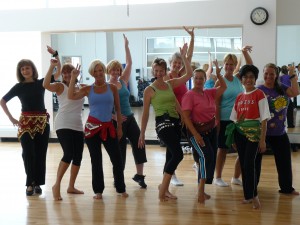
Aerobic activity helps you hear life's music.

Aerobic activity helps you hear life's music.

Researchers believe cardiovascular fitness contributes to better neural integrity in the cochlea, the auditory portion of the inner ear. A good cardio workout ensures ample supplies of oxygen-rich blood are delivered. There is also decreased likelihood of the physically fit, heart-healthy to suffer auditory damage from noise pollution, certain medications, and disease. It can be assumed one who is fit is often healthier overall.

Improved blood flow to the brain also aids in hearing. Allowing for ?fast thinking,? a brain on exercise can better sort and identify the sounds we hear. It is not simply the ability to hear better but to better process what is heard. Sound vibrations travel to the auditory portion of the brain where they are identified, along with their sources and meaning. Quick processing translates to quicker reaction time, which can have a huge impact on everything from driving a car to playing a game with grandkids.

Studies confirm improved aerobic fitness boosts cognitive processing speed, motor function, and visual and auditory attention in healthy older adults. Much of what we ?hear? happens when our brains translate sound waves into meaning. This is called auditory processing. (Maybe selective hearing isn?t limited to married couples.)

A sedentary lifestyle can deprive the brain of needed oxygen. The ear itself may be healthy and function at full capacity. However, a brain that lacks healthy fuel can affect attention to incoming sounds and the ability to interpret them. A brain that receives inferior blood, tainted with excessive cholesterol, triglycerides, and sugar, is at a disadvantage in multiple areas, including hearing sensitivity. Hence, the powerful? and unexpected? connection between heart (cardiovascular) health and hearing.

The lead author in a study performed by the American Speech-Language-Hearing Association advises, ?The older a person is, the more important it is to maintain or increase aerobic fitness, which is directly related to increasing cardiovascular health. This will positively affect many well-known health risk factors, as well as hearing sensitivity.?

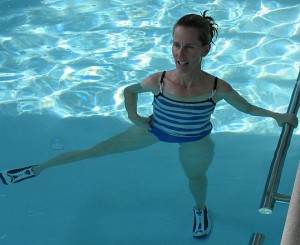
Combine soothing and effective with an aquatic workout.

Combine soothing and effective with an aquatic workout.

Focus on engaging large muscle groups in aerobic activity for approximately 30 minutes, five days a week. The golden standard. Increasing physical activity in any capacity helps though, even if only a farther walk in the parking lot. A simple increase to a moderate fitness level is beneficial in maintaining the hearing levels of younger years. Try swimming, if joints are bothering you (and for a refreshing change, if they are not). Where?s the motivation to improve hearing if all you chat about are aching knees.

Let the Music Play, with Limitations

Earbuds for portable music players.

Earbuds for portable music players.

Portable audio devices are tiny and getting smaller. Earphones have shrunk to buds that directly insert in the ear. On-the-go listening never has been more convenient. As a result, people (especially teens and young adults) are grooving without limitations. Cool, yes. Risky, possibly. Depending on duration of use and volume, this ?noise? can cause damage to the delicate hair cells in the inner ear, which transform sound waves to electrical signals the brain receives for auditory processing.

Follow safety guidelines when listening to earbuds (in-ear headphones).? Listen for a maximum of 1.5 hours per day at 80 percent volume or less. You can safely increase to approximately 4.5 hours per day, if you decrease to 70 percent volume or less. Balance a safe volume level with a safe duration. Softer, of course, is better. The risk of permanent hearing loss can increase with just five minutes of exposure a day at full volume.

Hear This and Hear It Well

Much of what previously was blamed on aging?blaring TVs, a kink here, a stiff joint there?is now being recognized as a result of misuse of the body. Trends toward healthier lifestyles filled with physical activity combine with advances in medicine and scientific research. The outcome indicates advanced age, although often the excuse, is not itself the cause for decline of health.

You don?t have to feel, hear, or even look a certain way because of the year on your birth certificate. Condition your body and travel in the direction of wellness throughout life, including during senior years. Then, enjoy ?youth? for longer; after all, it has no official age range. Baby boomers know it and flood the fitness scene as proof.

The more we learn, the more we realize age truly is just a number. Heart disease, diabetes, high blood pressure, osteoporosis, arthritis, and hearing loss? all of these often were assumed as part of the aging process. It was almost an expected natural progression. We know better now. Research proves being physically active into senior years improves health and increases the opportunity for an active lifestyle at any age.

There is a lot to be heard. Preserve your hearing.

There is a lot to be heard. Preserve your hearing.

Although the elderly traditionally may suffer hearing insensitivity, their wisdom often makes them the best listeners. Perhaps we should better hear what they have to share. So often, society turns a hurried deaf ear. What seniors may provide in a simple chat likely wasn?t discovered in a lab, tweeted on the Internet, or texted on a mobile device. Yet, it may be just the anecdote we need to grow, learn, and better understand.

Perhaps we should practice better use of our ears early on to hear more clearly throughout life. This skill, combined with that consistent cardio routine, can help preserve lifelong hearing sensitivity.

Sources

?Exercise Promotes Hearing Health,? by Helaine Alessio and Kathleen Hutchinson at www.hearingreview.com.

?How Exercise Can Help Your Ears,? by Erica Patino at www.everydayhealth.com.

?iPod Safety: Preventing Hearing Loss in Teens,? by Alice Park at www.time.com.

Image Credits

Senior with MP3 player (introductory photo): http://www.flickr.com/photos/67835627@N05/7301110748/

Earbud hoodie: http://www.flickr.com/photos/kellyhogaboom/6154329624/

Earth?s music: www.activehappiness.com.

Related Articles:

Have a story that you would like to share or a topic/interest that we haven't covered? Click here to contact us.

Source: http://fitnessandwellnessnews.com/health/healthy-hearing/

fireworks 4th of July Andy Griffith joe johnson scientology Wimbledon 2012 TV Schedule anderson cooper

Source: http://ethnocentric-firecracker.blogspot.com/2012/10/healthy-hearing-fitness-wellness-news.html

nate mcmillan clooney arrested southern miss rod blagojevich rod blagojevich uconn ncaa march madness

FDA: Pharmacy tied to outbreak knew of bacteria

WASHINGTON (AP) ? Staffers at a pharmacy linked to the deadly meningitis outbreak documented dozens of cases of mold and bacteria growing in rooms that were supposed to be sterile, according to federal health inspectors.

In a preliminary report on conditions at the pharmacy, the Food and Drug Administration said Friday that even when the contamination at New England Compounding Center exceeded the company's own safety levels, there is no evidence that staffers investigated or corrected the problem. The FDA uncovered some four dozen reports of potential contamination in company records, stretching back to January this year.

The report comes from an FDA inspection of the Framingham, Mass.-based company earlier this month after steroid injections made by the company were tied to an outbreak of fungal meningitis. FDA officials confirmed last week that the black fungus found in the company's vials was the same fungus that has sickened 338 people across the U.S., causing 25 deaths.

The New England Compounding Center's lawyer said Friday the pharmacy "will review this report and will continue our cooperation with the FDA."

Compounding pharmacies like NECC traditionally fill special orders placed by doctors for individual patients, turning out a small number of customized formulas each week. They have traditionally been overseen by state pharmacy boards, though the FDA occasionally steps in when major problems arise. Some pharmacies have grown into much larger businesses in the last 20 years, supplying bulk orders of medicines to hospitals that need a steady supply of drugs on hand.

The FDA report provides new details about NECC's conditions, which were first reported by state officials earlier this week. The drug at the center of the investigation is made without preservative, so it's very important that it be made under highly sterile conditions. Compounding pharmacies prepare their medications in clean rooms, which are supposed to be temperature-controlled and air-filtered to maintain sterility.

But FDA inspectors noted that workers at the pharmacy turned off the clean room's air conditioning every night. FDA regulators said that could interfere with the conditions needed to prevent bacterial growth.

Inspectors also say they found a host of potential contaminants in or around the pharmacy's clean rooms, including green and yellow residues, water droplets and standing water from a leaking boiler.

Additionally, inspectors found "greenish yellow discoloration" inside an autoclave, a piece of equipment used to sterilize vials and stoppers. In another supposedly sterile room inspectors found a "dark, hair-like discoloration" along the wall. Elsewhere FDA staff said that dust from a nearby recycling facility appeared to be drifting into the pharmacy's rooftop air-conditioning system.

The FDA on Friday declined to characterize the severity of the problems at NECC, or to speculate on how they may have led to contamination of the products made by the pharmacy. FDA emphasized that the report is based on "initial observations" and that the agency's investigation is ongoing.

The agency also provided new details about the pharmacy's handling of the steroids it recalled last month. The company recalled three lots of steroids made since May that totaled 17,676 single-dose vials of medicine ? roughly equivalent to 20 gallons. The shots are mainly used to treat back pain.

According to the agency's report, the pharmacy began shipping vials from the August lot to customers on Aug. 17. That was nearly two weeks before the pharmacy received test results from an outside laboratory confirming the sterility of the drug. When FDA scientists went back and tested the same lot this month, they found contamination in 50 vials.

Outside experts said the report paints a picture of a dysfunctional operation.

"The entire pharmacy was an incubator of bacteria and fungus," said Sarah Sellers, a former FDA officer who left the agency in 2008 after unsuccessfully pushing it to increase regulation of compounding pharmacies. She now consults for drug manufacturers. "The pharmacy knew this through monitoring results, and chose to do nothing."

Source: http://news.yahoo.com/fda-pharmacy-tied-outbreak-knew-bacteria-232353335--finance.html

kid cudi ben breedlove matt barnes hcm loretta lynn gene kelly zoe saldana zooey deschanel and joseph gordon levitt

Learn How To Come Across the Most Suitable Compact Small ...

Ruby on Rails is truly a multipurpose world-wide-web software improvement system in addition to a sturdy resource for forming impressive internet purposes. RoR aids to construct word wide web apps quickly and simply and it is just a very highly favored software for crafting firm website pages. Ruby on Rails vouches to supply agile world wide web progress with its DRY (Dont Repeat Your self) and COC (Conference more than Configuration) philosophy.

RoR is easily the most in demand system among the the developer group since it involves code reusing, which facilitates in slicing down on improvement time. Ruby on Rails includes significantly less coding when compared with other frameworks and thus, facilitates to accomplish many assignments easily and performance. It is just an extensive device for making a selection of online purposes for various platforms like ecommerce, CMS, and social networking networks. According to the MVC design it accounts for fast net progression.

Great things about Ruby on Rails Framework for web site growth

-Open resource world-wide-web framework
-Lesser coding and a lot faster internet improvement, and saves progression time
-Less glitches in word wide web apps
-Improved Productiveness
-Enables to make very highly interactive options for internet sites
-Rapid improvement of challenging website programs.

Ruby on Rails has proved to achieve success in putting together high-quality webpages. The notable webpages done around the RoR system consist of BBC, CNET, Amazon, and Yahoo. RoR is considered the apt solutions for smaller start-up organizations to huge well-established kinds, wanting to get a cutting-edge of their organization. It can help to develop dynamic apps and it integrates with Ajax to grow abundant net apps.

Ruby on Rails is a really light-weight and strong software in acquiring protected net apps. To be moveable, it proves to generally be an user-friendly instrument for builders. It?s acquired a structured format that gives clarity towards the developer even though generating internet programs. RoR helps make programming less complicated and a lot easier; the developer enjoys functioning because of the RoR framework and it can help them to indulge in performing on dwell assignments. RoR enhancement is cost-effective because it is surely an open up resource framework. Internet sites created about the RoR system are generally improved or altered easily and precision. So, webpage upkeep can be quick and simple along with the RoR framework. It can be as a consequence recommended by several agencies for growing their internet sites.

Ruby on Rails enhancement is popularly useful for the next teams

-RoR is a most helpful system for building internet websites similar to social media marketing networking. It gives you lots of of plug-ins for this progression.
-RoR is similarly reliable for acquiring eCommerce online websites
-It is a fantastic resource for subject matter administration procedure

If you want increased details for the topic, make sure you browse to Web Hosting Expenses Check The Price Of The Internet Hosting Plans Very Fastidiously to be the respective piece of writing would give you with supplemental aspects around the subject.

Related posts:

  1. Minimal Industry Hosting Plans: Smaller Business Enterprise Hosting That Prices Little Or No
  2. Not So Big Webhosting ? Compact Internet Marketing Business Web Hosting Services
  3. The Best Way To Search For Dependable And Inexpensive Internet Hosting Products And Services?
  4. Bargain Compact Small Business Internet Hosting ? Guideline To Doing one Of The Best Solution
  5. Internet Hosting Program ? Various Kinds Of Internet Hosting Expert Services

Source: http://mysixstringsblog.com/learn-how-to-come-across-the-most-suitable-compact-small-business-internet-hosting-expert-services/?utm_source=rss&utm_medium=rss&utm_campaign=learn-how-to-come-across-the-most-suitable-compact-small-business-internet-hosting-expert-services

flying car masters golf tournament the replacements how to hard boil eggs new nfl uniforms easter derbyshire

Thursday, October 25, 2012

Movie Review: The House I Live In Offers a Powerful History of the ...

Eugene Jarecki?s documentary The House I Live In is a stark examination of the impact drugs and the war on drugs are having on America. He begins by developing his own personal attachment to the issue. Growing up, he was close friends with the family of his housemaid, an African-American woman named Nannie. But as Nannie?s kids got older, Jarecki grew away from them. Then, he discovered, each member of Nannie?s family began wrestling with drugs, addiction, legal troubles, and premature death. How did this happen? The filmmaker?s effort to answer that seemingly straightforward question draws us into the impossible complex and destructive role drugs play in American society.

Perhaps what is most impressive about Jarecki?s effort is that it is so loaded down with history, statistics, and personalities that it doesn?t break apart at the seams. He interviews police, prison guards, dealers, former drug abusers, judges, scholars, lawyers, family members, and just about every kind of person affected by the war on drugs. Yet the harder Jarecki searches, the more elusive answers become. If anything is clear by the film?s end is that the way we have battled the drug trade since the Nixon administration has only served to create and sustain a reliance on the black market economy of drugs among the urban poor, while harsh penalties enacted by tough-on-crime politicians have ensured that cycle is nearly impossible to break. The House I Live In?doesn?t?offer much by way of a hopeful way forward. But then the first way to conquering an addiction is admitting you have a problem.

Source: http://frontrow.dmagazine.com/2012/10/movie-review-the-house-i-live-in-offers-a-powerful-history-of-the-unwinnable-war-on-drugs/

NBA randy travis lakers Allyson Felix Kourtney Kardashian Baby Girl Ashton Eaton London 2012 basketball

Indiana picked as Big Ten favorite in basketball

Indiana men's NCAA college basketball player Jordan Hulls talks to reporters at Big Ten media day in Rosemont, Ill., Thursday, Oct. 25, 2012. (AP Photo/Nam Y. Huh)

Indiana men's NCAA college basketball player Jordan Hulls talks to reporters at Big Ten media day in Rosemont, Ill., Thursday, Oct. 25, 2012. (AP Photo/Nam Y. Huh)

Indiana men's NCAA college basketball head coach Tom Crean speaks at Big Ten media day in Rosemont, Ill., Thursday, Oct. 25, 2012. (AP Photo/Nam Y. Huh)

Ohio State men's NCAA college basketball player Deshaun Thomas talks to reporters at Big Ten media day in Rosemont, Ill., Thursday, Oct. 25, 2012. (AP Photo/Nam Y. Huh)

(AP) ? Tom Crean didn't really understand what he was getting into when he took the Indiana job four years ago.

Now, the mess is gone. Just look at the Hoosiers.

They are the top team in the Big Ten and Cody Zeller is the Preseason Player of the Year, according to a vote by conference media, results that were hardly surprising given their jump last season.

All the Hoosiers did was orchestrate a 15 1/2 -game turnaround that matched the biggest in Big Ten history, going 27-9 on the way to the Sweet 16.

It's fair to say they've come a long way since Crean took over for Kelvin Sampson in the wake of the phone-call scandal that gutted the program.

"We had hit rock bottom," he said Thursday at Big Ten media day. "We had all kinds of issues that were inside the program. You don't take the job at Indiana thinking you're going to deal with what we were dealing with, but we did. And we weren't going to leave. That wasn't an option."

Crean said he actually had a chance to leave after his first season at Indiana, a 6-25 nightmare in 2008-09 that included a 1-17 conference record, and he would have earned what he was making in his previous job at Marquette. It took him "about 10 seconds" to say no.

Now, the Hoosiers are back on top in a conference that appears to be loaded.

Michigan and Ohio State were picked to finish second and third after sharing the regular-season title with Michigan State last season, and the way Crean sees it, those three are the teams to beat until someone unseats them.

The Hoosiers have as good a chance as any, with the 6-foot-11 Zeller back after averaging 15.6 points and 6.6 rebounds as a freshman. He was a unanimous pick for the preseason all-conference team, with Michigan's Trey Burke, Ohio State's Aaron Craft and Deshaun Thomas, and Penn State's Tim Frazier also making it.

"The target of being an Indiana Hoosier has never changed," Crean said. "Indiana is synonymous throughout the country for being known for a lot of things in basketball. It was always a big, big game. It was always a big deal when you were playing Indiana or Indiana was coming to town. And I think that hasn't changed. Will it grow some? Maybe. But I think the bottom line is a year ago, when there really weren't those outside voices talking in a totally positive light where the team was at, that didn't phase them. They continued to work."

The Hoosiers are facing no easy task.

Michigan is right there. So is Ohio State, even if its best player (Jared Sullinger) and one of its all-time leading scorers (William Buford) are gone after a Final Four run.

The Buckeyes still have three starters back. And Michigan State coach Tom Izzo likes his team's chances even though Draymond Green is gone.

"We have a chance to put together a pretty good team, and unfortunately it's in a tough conference this year and that's going to make a difference," Izzo said.

Strength of the conference was a big theme on Thursday, only this year it seemed like something more than coach-speak. There seems to be some weight to it.

"We're going to have to back it up," said Wisconsin coach Bo Ryan, whose team is coming off a 26-win season and Sweet 16 run. "We're going to have to play well, that's for sure. There are certain teams now in our league that have that 'X' mark on their back, but that's good. I think that's good, that quality competition, that interest, the outside interest of people saying, "Well, we think this team is pretty good." This team is pretty good. That's OK, that's great for the league."

For Indiana, it's been a tough climb back toward the top. The Hoosiers won just 10 games in Crean's second season and 12 in his third, before turning it around a year ago. Zeller's arrival was the extra kick the program needed.

"It's pretty crazy to think about how far we've come," senior Jordan Hulls said. "It speaks volumes of how Coach Crean and his staff have really instilled their lives into getting Indiana basketball back to where people are used to seeing it. Being part of the losing seasons and then now, last year having a pretty good year and then expectations for this year, it's pretty cool to be a part of that."

Associated Press

Source: http://hosted2.ap.org/APDEFAULT/347875155d53465d95cec892aeb06419/Article_2012-10-25-Big%20Ten-Media%20Day/id-aa51f39c23244d16abf363f793b4efd5

real housewives of new jersey act Kanye West sex tape emmys emmys torrey smith torrey smith

Ballmer: Windows 8 PCs Are ?The Best PCs Ever.? The Experience Is ?Truly Magical?

P1010462-croppedAt Windows 8 launch event, Microsoft co-founder and CEO Steve Ballmer took the stage to discuss Windows 8 on desktops, laptops and tablets today. According to Ballmer, who was his own energetic self today, today marks the start of a "new era for Microsoft and our customers." According to Ballmer, the new slate of Windows PCs that's coming on the market in the next few weeks will be the "best PCs ever." Indeed, he called the whole Windows 8 experience "magical." Ballmer says users will "love the experience."

Source: http://feedproxy.google.com/~r/Techcrunch/~3/YE5OzzVwKb8/

2012 holidays prosperity japan earthquake bosom buddies diplo rodney atkins fergie

Wednesday, October 24, 2012

Apple iPad mini vs. Apple iPad (4th generation ... - Know Your Cell


With Apple's iPad mini and 4th generation iPad finally unveiled, some critics are no doubt already proclaiming both to be the best tablets on the market. All this without a single review out there for consumption.

While there?s no escaping the fact that both are likely amazing, what if you turned the tables and compare them against each other? Who wins then? iPad mini or iPad? Read on below for the full comparison!

Design

The design of both iPads is very similar, but let's start with the mini first. The iPad mini is 7.2mm thick and extremely light. It is really all display in a single unibody and not much bezel. It's basically the full iPad experience, but only smaller.

The 4th generation iPad 4, meanwhile, features the same design as the iPad 3. It has a considerable amount of bezel and a light, uni-body frame. It's nice to hold and makes the Nexus 7 and Kindle Fire look like a toy.

Winner -- Draw! Both devices have amazing designs and feel great in the hand.

Specs

Apple?s 4th generation iPad runs on a A6x quad-core Cortex-A15 processor. This is a huge deal because it means Apple beat both TI and Samsung on bringing A15s to market. The device also makes excellent use of the PowerVR GPU, which delivers solid gaming performance at reasonable temperatures, and the device has 1 GB of RAM.

The 4th gen iPad comes in three flavors: 16GB, 32GB and 64GB but, offers no support for removable memory.

The iPad mini, on the other hand, is powered by an older, A5 dual-core CPU, clocked to 1.2GHz. Its GPU offers superb gaming performance, but it lacks in comparison to the full iPad. It also likely doesn't deliver as smooth a performance overall.

Like the 4th gen iPad, the iPad mini also features 16GB, 32GB and 64GB of storage and comes in black and white. Cellular variants are also available for both.

Winner -- 4th-generation iPad, hands down! The A6x CPU powers the iPad to victory here.

Screen

The iPad features a 9.7-inch retina display that operates at a pixel density of 326PPI. That's quite a bit more than the 153PPI found on the iPad mini.

From what we can tell, it's no contest. Retina wins every single time and this time is no exception!

Winner -- 4th-generation iPad.

Software

Both the iPad mini and iPad are powered by iOS6, and while the operating system is still the most user friendly and polished in the land, it is starting to feel a little tired and one dimensional. Regardless, though, it is still the best in the game.

Considering both run the same OS, we really have a draw here!

Winner -- Draw.

And the overall winner is...

4th generation Apple iPad.

The devices are, in most areas, evenly matched, but the 9.7-inch iPad seems to have more polish and a far better display. The A6x CPU also can't be matched!

While the 4th generation iPad might be better, the choice between the two devices is largely subjective. They both offer an excellent experience, so don't discount the iPad mini just yet. The iPad mini is especially good for anyone who needs a tablet and is on the move.

What tablet will you be buying? The all new iPad or the newly-unveiled iPad mini?

?

?

Source: http://www.knowyourcell.com/news/1647511/apple_ipad_mini_vs_apple_ipad_4th_generation.html

ricky gervais golden globes epidermolysis bullosa miss wisconsin law abiding citizen golden globes 2012 miss america lana del rey saturday night live

interaction needed between business support groups and ...

You Are Here: Home ? General News ? More interaction needed between business support groups and government agencies ? NBSSI

Page last updated at Tuesday, October 23, 2012 21:21 PM //

Mr Ransford Kani, Projects Officer National Board for Small-Scale industries (NBSSI), Volta Region, has called for more interaction between business development support interventions and business support bureaucracies, such as the NBSSI.

He said that linkage was crucial for the achievement of targets of the intervention support groups, because data necessitating the interventions were provided largely by the bureaucracies.

Mr Kani was speaking to the Ghana News Agency (GNA) on the sidelines of a Venture Capital Regional Round Table Forum, held under the auspices of the Venture Capital Trust Fund, in Ho on Tuesday.

He said by the continual association with business people over the years, the NBSSI could be of enormous help to the various business support groups in the country.

Mr Kani said without collaboration with these organizations, the business support groups could easily miss their targets.

Business people mainly from the small-scale sector, officials of state institutions in areas of business support and advice, members of business associations and service providers attended the Roundtable.

Participants were taken through lectures on Venture Capital, Challenges of Venture Funding and Investment Challenges.

Mr Emmanuel Osei Akuamoah, Head of Administration and Finance said what Venture Capital Trust Fund had to offer was equity and not loans.

He said the Fund was established by an act of parliament in 2004 to ?provide financial resources for the development and promotion of venture capital financing for the Small and Medium Enterprises (SMEs), in priority sectors of the economy as shall be specified from time to time.?

Mr Akuamoah said the Fund had since been available to grow businesses but needed to project itself to get more clients.

He observed that business people in the Volta Region for example had not benefited from activities of the Fund, when the Fund was perhaps, what they needed to start, expand or revive their businesses.

Mr Akuamoah explained that equity financing, was hassle-free than bank loans.

Representatives of Fund Management Companies associated with the Fund took participants through processes to follow to qualify for the partnerships, duration of such partnerships and exit arrangements.

Besides a seed capital of GH?22.4 million, the Fund had additional capitalization from local banks.

Source: GNA

Comments

Source: http://www.ghanabusinessnews.com/more-interaction-needed-between-business-support-groups-and-government-agencies-nbssi/

roger federer Olga Korbut Usain Bolt 2012 Olympics Katie Ledecky Aaron Ross Sikh temple lollapalooza