Saturday, October 19, 2013

Important for Fed to hear range of views: Fed's George


WASHINGTON (Reuters) - Allowing diverse views to be heard within the Federal Reserve was a deliberate goal of its founders 100 years ago and remains vital today, a senior Fed official who has consistently voted against the majority wish of her colleagues said on Wednesday.


Esther George, president of the Kansas City Federal Reserve Bank, who made no mention of the current U.S. economy or monetary policy in remarks prepared for delivery at an event Wednesday evening, has dissented at every meeting this year over the central bank's ultra-easy monetary policy.


At an event in Oklahoma City to commemorate the memory of Senator Robert Owen, who co-authored legislation that created the Fed in 1913, George argued that the airing of diverse views respected the intent of the founders of the U.S. central bank.


"The Federal Reserve is not a monolithic organization, and such feedback - both from outside and inside the organization - ensures that the Fed remains accountable to the public it serves," she said.


President Barack Obama's nomination of Janet Yellen to replace Chairman Ben Bernanke when his term ends in January has raised questions about the extent to which Yellen will try to get officials to speak with one voice in the future.


Her statement at the October 9 White House ceremony included a reference to the merits of vigorously debating diverse views "and then to unite behind its response."


That remark might be interpreted as a call for some policymakers to temper their public comments, but George signaled that she plans to keep speaking her mind.


"It is important that the Federal Reserve's structure today still allows for a range of views to be considered when it deliberates actions that affect so many people," she said.


(Editing by Leslie Adler)


Source: http://news.yahoo.com/important-fed-hear-range-views-feds-george-224544312--business.html
Related Topics: zac efron   USA vs Costa Rica   green bay packers  

Roseland Ballroom, Historic NYC Venue, Closing in April


Cory Schwartz/Getty Images


Radiohead performs at Roseland.


New York City's famed Roseland Ballroom will close its doors in April, according to an internal e-mail obtained by Billboard, though no official announcement has been made.


The venerable venue, owned by developer Larry Ginsberg and booked by Live Nation, opened at its 52nd street location, a converted skating rink, in 1958 and is a sentimental favorite for many bands. The history of the venue in New York dates back to 1919, when it was located at 51st and Broadway, and prior to that in Philadelphia.


Evolving from ballroom dancing in the '20s to popular music, Roseland has for years been a favored New York play for a wide range of bands from the early days of rock, through disco, grunge, modern rock, jam, pop, urban and EDM. The venue found a new gear with a $1 million production/rigging renovation in the early '90s, funded by Ginsberg, which led to more high-profile bookings of multiple dates for bands like Red Hot Chili Peppers, Nirvana and other hot acts when competition in that cap range was not as fierce.


The room sits in a sweet spot in terms of capacity at about 3,500, a number just right for developing bands climbing up the venue ladder as well as bigger bands -- including The Rolling Stones, Madonna and Radiohead -- that want to create buzz with an underplay. But its capacity is also a highly competitive space in the market, with AEG's Best Buy Theater (at about 2,500), Hammerstein Ballroom (3,500), Bowery Presents Terminal 5 (3,000) and the Beacon Theatre (2,800), operated by Madison Square Garden.


Still, Roseland remains a busy room, and one artists and agents prefer in many cases. So the move to close is likely related more to property values than the venue's bottom line.


The closing of Roseland will be "a huge loss for concerts in New York City," says Ken Fermaglich at the Agency Group, who was surprised to hear the venue would shutter. "I love the venue and always have. I saw Nirvana there and will never forget that show."


Among the acts currently on the Roseland calendar are Danzig, Fitz & the Tantrums, The Wanted, Pretty Lights, Hoodie Allen, and Panic! at the Disco. While no announcement has been made, it is likely that high-profile artists will want to send the building off in style.


Live Nation New York and Roseland could not be reached for comment at press time. This story will be updated as more information becomes available.


This story first appeared on Billboard.


Source: http://feedproxy.google.com/~r/thr/music/~3/saz1566-NuA/story01.htm
Related Topics: brandon jacobs   nfl   Dufnering   Amanda Dufner   oj simpson  

Friday, October 18, 2013

Cool Moves


TUESDAY, APRIL 20, 2010, AT 6:19 PM
Tornado Kills at Least Five in Oklahoma


FRIDAY, APRIL 29, 2011, AT 3:07 PM
Obama Gets Firsthand Look at a Tornado Damage


TUESDAY, APRIL 20, 2010, AT 6:19 PM
Tornado Kills at Least Five in Oklahoma. Very long title. Long long long. Tornado Kills at Least Five in Oklahoma. Very long title. Long long long.


TUESDAY, APRIL 20, 2010, AT 6:19 PM
Tornado Kills at Least Five in Oklahoma. Very long title. Long long long. Tornado Kills at Least Five in Oklahoma. Very long title. Long long long.


Source: http://www.slate.com/articles/life/cool_story/2013/10/how_movies_express_cool_through_music_and_dance_video.html
Related Topics: Ozymandias   nadal   Blurred Lines Lyrics   Charlie Manuel   greg oden  

Logging In to the Brain's Social Network


Copyright © 2013 NPR. For personal, noncommercial use only. See Terms of Use. For other uses, prior permission required.


JOHN DANKOSKY, HOST:


This is SCIENCE FRIDAY. I'm John Dankosky. Every day, maybe more times than you want to admit, you probably log onto Facebook, post an article you think your friends might find interesting or maybe you like someone's status. Maybe you notice a sick co-workers and ask how they're feeling. Our days are filled with these small social interactions. But have you ever stopped to think about how your brain is responding during these experiences?


There's a center in our brain for understanding what other people are feeling and why exactly their minds evolve this way. In his new book "Social: Why Our Brains Are Wired to Connect," neuroscientist Matthew Lieberman looks at how our brains are geared to solve one of the most complicated puzzles, human interaction. Matthew Lieberman joins us now. He's director of the Social Cognitive Neuroscience Laboratory and professor of psychology at the University of California, Los Angeles. Welcome.


MATTHEW LIEBERMAN: It's a pleasure to be with you, John.


DANKOSKY: Now, if you have a question for Matthew Lieberman, you can join us at 1-800-989-8255, that's 1-800-989-TALK. You can also Tweet us @scifri. So you study social cognitive neuroscience, how our brains think socially. What exactly does all that mean?


LIEBERMAN: Well, you can't really go very far in life at all if you're not able to interact well with those around you. You can't really built a rocket ship or a radio station or really anything at all. And so our species has evolved to really master this feat of bringing us together and being able to work well together in teams. And we need mental machinery to be able to allow us to do this sort of thing. And that's what I and all the folks in my field tend to study in one form or another.


DANKOSKY: You write that mammals evolved a need for social connection. Can you explain how this worked evolutionarily?


LIEBERMAN: Sure. So mammals tend to have oversized brains compared to their bodies. And this creates a very difficult problem, which is getting that brain out of the birth canal. And the way evolution has solved that is by having a smaller brain come out of the birth canal and then continue to grow once it's out. The benefit of that is that you can then have that brain fine tuned by the culture or environment it is finished being built in. The downside of that is that all mammalian infants are incapable of taking care of themselves.


So we tend to think of people as needing food, water and shelter in order to survive. But if you're a mammalian infant, what you really need to survive is a caregiver who has an urge to connect with you so strong that when they hear you cry and smell the smells that come from babies, they actually go towards you instead of away from you.


DANKOSKY: So mammals can't really take care of themselves as they're growing up so they learn to rely on others. Now, this big human brain that we have, one of the things that we think about is we've got this big brain in order to help us with abstract reasoning. It's what sets us apart from the other animals. But you suggest that one of the things that our big brain does is help us to develop these social cognitive skills.


LIEBERMAN: Yeah, so the sort of long standing intuition is that our brain got larger over evolution to allow us to do very complex analytical things like math and calculus. And that's certainly consistent with data, but there's a really elegant theory from Robin Dunbar in England suggesting that the best predictor of why our brains are bigger than other primates' brains is actually it's letting us be able to connect and group with larger and larger numbers of other humans. And we seem to be much better at this than any other species, living in larger groups.


And living in larger groups means understanding the dynamics of the different people in the group. And that actually is why gossip turns out to be a really important function. It's how we communicate about our relative status with others in the group.


DANKOSKY: We're going to get some of your questions in a moment at 1-800-989-8255 or 1-800-989-TALK. One of the things that's most fascinating in your book is how you write about pain. And obviously we all know about physical pain but there's social pain, rejection, or when someone dies you feel pain. And we talk about it in those terms.


But one of the things that you've studied is that this pain is not just, as we say, in our head. It's real. We feel it. Maybe you can talk about some of this work you've done with social pain and how we actually feel it as humans.


LIEBERMAN: Sure. When we hear about someone saying that they're feeling social pain, the pain that comes from loss, death, rejection, things like that, we tend to think of the word pain as being used metaphorically. And about a dozen years ago, Naomi Eisenberger and I decided to look into whether or not it was more than just a metaphor.


And so we had people play this little ball tossing game on the computer while they were laying in an MRI scanner. And you think you're playing with two other people who are also in scanners. And then at a certain point in the game we actually arrange it so that the other two players stop throwing you the ball. And so you get left out of the game for the remainder of the game. You're just sitting there waiting for the ball to come back to you.


And when we looked at the brains of these individuals who had just been rejected, we saw two fascinating things. The first thing we saw was that the same brain regions that registered the distress of physical pain were also more active when people were left out of the game compared to when they were included. And then the second thing we saw was that the people who told us they were more bothered by being left out of the game were the people who activated these brain regions the most intensely.


And then I think the finding that tends to really grab people after they hear these initial findings is much later work that shows that if you take Tylenol, it can actually make these effects go away.


DANKOSKY: My goodness. But - okay. These are people that don't know each other. This isn't like losing your girlfriend here. This is just a stupid ball-tossing game.


LIEBERMAN: No, that's right, it is. And I think that speaks to sort of how fundamentally it's wired into our operating system that even something as trivial as two strangers or two people you've only met for a few moments can produce this effect. Other work has actually looked at people thinking back on being romantically rejected and they see similar findings there as well.


DANKOSKY: Brian's on the line from Grand Rapids, Michigan. Hi, Brian. Go ahead.


BRIAN: Good afternoon. Speaking of social pain, when somebody tells me a story of someone they know that has had a fall, like a trip or something, I almost immediately feel a cramp or like being punched in my gut. Why is that?


LIEBERMAN: Yeah, well, we're built to be an empathic species. And humans aren't the only species that feel empathy. But I think pain is actually a very strong example, at least physical pain, where when we see someone else in pain we actually show responses in the same body parts. You'll see changes in the electrical activity in the same body part in the person watching someone in pain as the person in. And I think this speaks to us being built to be deeply socially interdependent.


The fact that when we see someone in pain it motivates us to help them, makes us very different than the sort of selfish and self-interested creatures that I think we sometimes believe we are. But I think that's a mistaken belief about ourselves.


DANKOSKY: Before we move away from this idea of pain, I guess one question I'd have is, social pain - I guess I'm not sure what really it does for us. I mean, if we have physical pain, it might tell us to stay out of trouble. You know, you put a hand on a hot stove, you don't put it back there again. What exactly does social pain do for us as humans?


LIEBERMAN: I think it does the same thing that physical pain does. So, physical pain does two things for us. It turns our attention to the thing that's going on right now. So if your hand is touching a hot stove, it gets you to remove your hand very quickly from that hot stove. And then it teaches you a lesson. Don't put your hand there again. And I think when it comes to social pain, it does these two things and probably one more.


So it reorients our attention and says, okay, if I'm being rejected from a group, how do I need to change my behavior or what I say or think in order to not be excluded or rejected from that group? It teaches me lessons about how to behave differently in the future. And because we can imagine the future, we can also use that preemptively. We can feel social pain at the threat of being excluded from a relationship or a group.


And so I think we often use that to manage our behavior prospectively before the bad events happen. The fear of that rejection can drive us to behave in more group-friendly ways.


DANKOSKY: We're talking with Matthew Lieberman. His new book is called "Social: Why Our Brains Are Wired to Connect." Mackenzie's on the line in St. Louis. Hi, Mackenzie.


MACKENZIE: Hi, how are you?


DANKOSKY: Doing well. What's on your mind?


MACKENZIE: I was wondering how, like young children, how they're playing more on electronic devices. How is that impacting them with understanding emotions, like physical pain, those sorts of things, especially like really little kids around, like, two who are maybe living more experience with like tactile sort of sensory experiences because of things such as iPads.


LIEBERMAN: Yeah, you know, I think with any technology, going back to the ancient Greeks and the development of writing, there has always been a fear of us lowing a part of ourselves and that the next generation isn't going to sort of be as good as we are. And I think the reality is more complicated. I think future generations always become different as they adapt to the technologies and opportunities they have. I think that technology, if you spend too much time away from social interaction, I think that can impair your social skills.


But I'm not sure what this will really shake out to be. I think that Facebook and Twitter and so-on have given us a new arsenal of ways to connect. And I'm not suggesting that they fully replace the other kinds, but they are different kinds that we really never had in the history of mankind. And I think it will be fascinating to see how those folks who are kids - I have a six-year-old. How will he look back and evaluate what has been good or bad about the life he has led as a result of this constant access to digital technology and all the screens that we tend to be in front of?


DANKOSKY: Over a longer period living in front of these screens with a different sort of social interaction, do you expect that it would change us biologically if our brains have evolved this way so far to interact face to face? Over time, do you think that that changes us?


LIEBERMAN: You know, I think we're always going to be brought back to things that are fundamental needs. You can't away from things like the urge to eat and to be warm or cold, or whatever it is. And I think that when it comes to social connection, I think we have basic biological needs that are wired into us because of the purposes they serve. And so the question will be: Are those needs being served?


And if they aren't being served, I think people will disengage and say, you know, I need to create more space in my life for a different kind of social connection that my old fogey parents and grandparents keep telling me that I need, even though I, you know, ignored them for the last 20 years. Or, maybe they'll say: You know what? This really satisfies me in a way I wouldn't have guessed, and they'll look back and say they just didn't get it.


And I think we won't know until we get there. But I suspect it won't necessarily change us at an evolutionary level, because I'm not sure that these are the kinds of things that would really change who's going to be successful at reproducing or not.


DANKOSKY: You studied grief, as well, and that it can actually trigger our reward system, which sounds a bit counterintuitive. What did you find about this?


LIEBERMAN: Yeah. I just had a minor role in a study that was published a number of years ago, and the strange thing is if you look at the folks who are experiencing normal grief, you'll see activity in the pain distress regions of the brain. But if you look at folks who are experiencing chronic grief, where they don't seem to recover - my grandmother, I think, went through this when my grandfather passed away.


She spent 15 years really in a true grief state, for the rest of her life. When you look at these individuals, in addition to that social pain response in the brain, you will also see a reward response that's also being activated, a little bit like someone who would, say, like to quit drugs, but still finds those things rewarding because there is an addiction to those things that are bad for us.


And so I think that that was what differentiated folks who couldn't recover, is that there was still something rewarding about staying attached to this memory in a way that other folks seem to - little by little, seem to let go of their tight clinch on.


DANKOSKY: Interesting. You mean hanging on to these even painful memories.


LIEBERMAN: Yeah. Absolutely. Yeah. I think that - you know, we do all sorts of things that are good and bad for us at the same time, where we're trading off a temporary positive thing for something that, in the long-term, might be better if we chose a different course of action. I think that's a human duality that plays out through lots of decisions and behaviors we engage in.


DANKOSKY: I'm John Dankosky, and this is SCIENCE FRIDAY, from NPR. Let's go to Megan, who's calling from Ames, Iowa. Hi, Megan. Go ahead. You're on SCIENCE FRIDAY.


MEGAN: Hi. Afternoon. I had a question about empathy, since that was topic. Everyone knows a sensitive soul. Is there a biological basis for people who are better at empathizing than the rest of the population? Is that purely social, or is there a biological reason for that?


LIEBERMAN: Well, as a social neuroscientist, I guess I would never say something is purely social or biological. I think that almost everything biological is shaped by social factors, and social events are always rooted in our biology, as well as the environment we're in. But to speak to your question, there are certainly individual differences in empathic ability.


They are rooted in a number of different brain systems. So, empathy is kind of the perfect storm of different capacities we have as social creatures, coming together. It relates to an ability to kind of resonate with what we see going on with others, to hear stories about people being fired or winning a gold medal, and being able to then translate that into feelings of concern or celebration with those around us.


And then there's a very ancient part of the brain involved in caregiving, called the septal region of the brain. And that seems to translate these feelings into an urge to actually help assist or do something that aids the other person, and not so much focus on the consequences for ourselves. Empathy with someone on TV who's suffering that gets us to change the channel isn't very functional.


But when we empathize and it gets us to pick up the phone and make a donation or go volunteer, that's something that I think really is a magnificent part of what this orchestrated difference that our brain networks can do for us.


DANKOSKY: On the flip side, what can you tell us about people with conditions like autism, where empathy, the ability to connect with others, is limited in some way?


LIEBERMAN: Yeah. I mean, some say that autism is sort of the perfect storm of things not going right in the social brain. When I was looking into autism when I was writing my book - because I don't actually study autistic individuals myself - when I was looking into it, I was fascinated to find that autism, in many ways, seems to be perhaps the opposite of some of our intuitions about it.


We think of the autistic individual as sort of disengaged and really just preferring their own company and not really sensitive to the social world. But when you look even at one year old infants who are destined to become autistic, what you see is that they are coping with a social world that's too overwhelming for them, that some of their social emotional machinery is actually too sensitive. They're too sensitive to the social world.


And so what these autistic individuals or future autistic individuals are doing when they're one years old is what a lot of do when we're in the movie theater and the sound check comes on and it's too loud. We cover our ears, and we turn away. And these infants and then toddlers seem to be turning away from a lot of the social experiences that would train the social brain to become the social experts that we become by the time we're, you know, teenagers and young adults.


And one fascinating group that helps demonstrate this is individuals who are born deaf. So these individuals have no cognitive impairments, no brain impairments in most cases, and yet they show the same delay in being able to think socially, because when they're young, they're missing a lot of the sort of social lessons we get from seeing and hearing other people use social language and engage in social topics.


So it's not just that the autistic individual's brain is less interested in the social world. It seems to be something where they cope at a young age, and then this leads to a difference long-term. There's a beautiful quote from Jay Johnson, an autistic blogger, where he basically said: For me, looking at other people's faces, looking them in the eye is like putting my hand in a fire. It's just too intense. And I think that's a very different picture of autism than the one we usually have.


DANKOSKY: We're talking with Matthew Lieberman, whose book is "Social: Why Our Brains Are Wired to Connect." We'll be right back after this short break.


(SOUNDBITE OF MUSIC)


DANKOSKY: This is SCIENCE FRIDAY, from NPR.


(SOUNDBITE OF MUSIC)


DANKOSKY: This is SCIENCE FRIDAY. I'm John Dankosky, and we're talking about how our brains interact with the social world. My guest is Matthew Lieberman, director of the Social Cognitive Neuroscience Laboratory, professor of psychology at University of California, Los Angeles, and he's the author of a new book called "Social: Why Our Brains Are Wired to Connect."


One of our listeners emailed us and asked: So how does all of this explain bullying in our culture?


LIEBERMAN: Oh. Well, bullying is a complex issue that has to do with status, and often the bullies themselves are, in a sense, acting preemptively, because they are worried about being rejected, as well. But, I mean, bullying in general is obviously an increasing issue for our children, especially now that it's cyber-bullying as well.


We see these tragic cases every few months now of a 12 or 13-year-old taking their own lives because they say that the pain of this experience is worse than anything they could imagine. Now, that doesn't make a whole lot of sense, unless you take this idea of social pain being a real kind of pain seriously. But once you do, it makes sense, and there's data that suggests that this is also really directly going to affect academic achievement in the classroom, even though that's where the bullying is taking place.


DANKOSKY: Let's go to Alex who is calling from St. Mary's, Georgia. Hi, Alex. Go ahead.


ALEX: Oh, thanks for taking my call. I'm just wondering what the overriding position, I guess the predominant theory is on whether social mores and expectations are something like object permanence that we learn and stay with us in our minds for the rest of our lives, or something that's constantly changing and shifting through social situations.


LIEBERMAN: Oh. Well, I'm afraid the answer won't be very satisfactory, because I think the answer is it's a bit of both. I think that, you know, we are evolved over time to have morals that, you know, serve the group well and help us live successfully as groups and discourage certain kinds of bad behaviors.


But there are certainly norms that change from culture to culture. There are norms that change from different ideologies within a culture. So I'm sorry that's not a, you know, more precise answer.


DANKOSKY: One of the things you write about is this ability that we have to gauge what someone else is thinking. It's almost like mind reading. And you write about a mentalizing system. Maybe you can explain what you're talking about.


LIEBERMAN: Yeah, sure. So I sometimes describe this as one of our social superpowers. So, we have the ability - and we use it countless times each day, so often we probably don't recognize it - where we can sort of peer into the minds of those around us and imagine how they're currently responding to some situation, what their thoughts and feelings are, or what their response would be to some novel situation.


And we can use that to then interact more successfully with those people, to advance shared goals or try to do nice things for other people, because we can appreciate their point of view. Now, the thing that makes this system, I think, really interesting is that thinking about other people and their thoughts and feelings doesn't feel that different than other kinds of thinking, but it turns out that there's a different network in the brain for thinking socially and for thinking non-socially.


And these two networks are not only separate, but they tend to act a bit like a neural seesaw, so that when you see activity in one go up, the activity in the other tends to go down. And I think the last important thing to know about this is that our brains are wired such that whenever we finish doing some kind of analytic thinking, this network for social thinking almost immediately and spontaneously pops back up.


And that's a pretty big sort of decision for evolution to have made over time, that this is the single thing that our brain seems to get ready to do every time there's a break in the action. It gets ready to see the world socially, and that suggests that it really has a place of great importance in the success of our species.


DANKOSKY: You call it a default system, essentially.


LIEBERMAN: Yeah. That's what it's been called over time. It's both a default system, because it comes on by default, but it's also a kind of mind-reading system, because largely these regions are involved in reading the minds of others and trying to understand what's going on with them.


DANKOSKY: Before we run out of time, I have to ask about self-control and how it's used not necessarily just for individual good, but for the greater good, the social good that you write about.


LIEBERMAN: Yeah, sure. So, you know, most of the self-control that we engage in, it may or may not benefit us, but it almost always benefits society. In a classroom, the teacher is always happy when you engage in self-control. You might not be, but the teacher certainly will be. And I use the example of doctors. There was a recent poll suggesting that most doctors would choose a different career if they had it to do over.


Now, doctors go through an incredible amount of self-control to get to the point in their career where they are, from the tests they have to take, all the training they get. And they may not be very happy with the outcome of all of that, but we as a society are spectacularly happy that lots of people engage their self-control to become doctors and make the rest of us healthier. So self-control seems like something that is there to help us move our own agenda forward, but a lot of time self-control is really serving to move the group's agenda forward and serve the group. So it's a much more social factor than I think we usually consider.


DANKOSKY: What's the next big thing you're looking at?


LIEBERMAN: Well, I'm really interested in how these types of things play out in the real world. So we're doing a lot of work right now on education and how you could think differently about education and learning once you take into account what we know about the social brain. One of the things that we and other labs have found, is that if you give people social motivations to learn instead of the motivation to just take a test, they learn better.


And when they learn better, they do it using the social brain rather than the traditional brain regions involved in trying to memorize material. And because of that neural seesaw when we use that traditional analytical brain from memorizing, we're actually turning off the social brain that may have an especially good way of learning material.


And so we're looking at what happened when you have people, instead of learning for a test, they are learning the material in order to teach the material to someone else. And we think that learning in order to teach may actually be one of the secrets to improving learning for that teacher. And the sort of upshot of that is that if someone isn't doing well in a class, the goal should be to put them in the role of teaching.


Maybe teaching someone a few years younger who they'll feel autonomy and authority helping out this younger student, but they'll also engage the social brain which seems to be a really good system for getting new knowledge into our brains.


DANKOSKY: Matthew Lieberman is director of the Social Cognitive Neuroscience Laboratory, professor of psychology at the University of California, Los Angeles, and the author of this interesting new book "Social: Why Our Brains Are Wired to Connect." Thanks so much for joining us.


LIEBERMAN: Oh, thanks for having me.


Copyright © 2013 NPR. All rights reserved. No quotes from the materials contained herein may be used in any media without attribution to NPR. This transcript is provided for personal, noncommercial use only, pursuant to our Terms of Use. Any other use requires NPR's prior permission. Visit our permissions page for further information.


NPR transcripts are created on a rush deadline by a contractor for NPR, and accuracy and availability may vary. This text may not be in its final form and may be updated or revised in the future. Please be aware that the authoritative record of NPR's programming is the audio.


Source: http://www.npr.org/2013/10/18/237100760/logging-in-to-the-brains-social-network?ft=1&f=1032
Category: Austin Mahone   hocus pocus   What Time Does Ios 7 Come Out   Canelo Vs Mayweather   Kidd Kraddick  

This charming man? Morrissey book climbs charts

LONDON (AP) — The new book by British singer Morrissey is a classic. It says so right on the cover.


The memoir from the former frontman of The Smiths — titled simply "Autobiography" — is the first rock bio published under the venerable Penguin Classics imprint, home to Aeschylus, Jane Austen and Oscar Wilde. Morrissey has said he insisted on the "classic" label as a condition of signing with Penguin.


That has horrified some people in the publishing industry, but not the singer's many fans, who drove the book to the top of Amazon's U.K. chart the day after it was published Thursday.


Jon Howells, spokesman for the Waterstones book store chain, said Friday that the book is destined to be a Christmas-season best-seller.


"In Britain, he is one of our icons," Howells said. "His is the great untold story from the '80s generation of music heroes."


The Smiths and their enigmatic, gladioli-waving singer had a huge impact in 1980s Britain with alternately giddy and melancholy songs such as "How Soon is Now" and "This Charming Man." They weren't quite so popular in the United States, where "Autobiography" does not yet have a publisher.


The quartet broke up in 1987, and Morrissey has used up some of his fans' goodwill with increasingly curmudgeonly pronouncements during his solo career.


"Autobiography" opens with a vivid, verbose evocation of Steven Patrick Morrissey's childhood as part of a sprawling Irish family in the damp, industrial northern English city of Manchester, and his awakening to the bright joys of pop music.


Fans will find mordant wit and evocative turns of phrase, while critics will see boundless self-indulgence and the absence of an editor's trimming hand in the 457-page, single-chapter volume.


Reviewers have been sharply divided. Rock critic Neil McCormack gave the book a five-star review in the Daily Telegraph, calling it "the best-written musical autobiography since Bob Dylan's 'Chronicles.'" But the Independent's literary editor, Boyd Tonkin, tired of Morrissey's "droning narcissism" and "puerile litany of grievances."


Fans though, will likely lap up the personal insights from a musician, now 54, who has long avoided talking about his private life. Morrissey has had periods of depression; he had his first serious relationship in his 30s, with a man he memorably describes as "an ex-schoolboy sadist with a flair for complicity"; he later discussed becoming a parent with a close female friend.


"Tina and I discuss the unthinkable act of producing a mewling miniature monster," writes Morrissey, ever the romantic.


There are encounters — often awkward — with other famous people, moments of drama, including a 2007 kidnapping attempt in Mexico, and episodes of the absurd. Morrissey says he was once invited to appear on the sitcom "Friends," where "I am requested to sing 'in a really depressing voice.'"


And there is the inevitable score-settling. The Smiths' former record label, Rough Trade, comes in for vitriol. So do the band's bassist and drummer, with whom Morrissey and guitarist Johnny Marr fought a bitter royalties battle, recounted at length.


A Smiths reunion seems unlikely. Morrissey reveals that Marr once suggested reforming the band. But the singer said no.


"Surviving The Smiths is not something that should be attempted twice," he writes.


___


Jill Lawless can be reached at http://Twitter.com/JillLawless


Source: http://news.yahoo.com/charming-man-morrissey-book-climbs-charts-122108963.html
Category: Naya Rivera   james spader   Mexico vs Honduras   lamar odom   Riley Cooper  

Many investors look past Twitter's losses, for now


By Olivia Oran and Jessica Toonkel


NEW YORK (Reuters) - Investors willing to bet on Twitter Inc will have to overlook mounting losses and slowing user growth - and have faith that the eight-year-old Internet messaging company can transform a household name into advertising dollars.


Fund managers who were optimistic about Twitter's financial prospects shrugged off its latest $65 million quarterly loss as standard for startups chasing growth, pointing instead to revenue growth that more than doubled.


But others warned of the risks of investing in a company with a management that has yet to prove it can generate a profit.


"It's worth having exposure to a name like Twitter, although you have to take a conceptual leap of faith with regard to valuation, and say it's a unique franchise that isn't likely to go away," said Karl Mills, president and chief investment officer for private investment adviser firm Jurika, Mills & Keifer in San Francisco.


"Like Twitter, Amazon was in investment mode for a long time. They still are, so that doesn't worry me."


Twitter's latest IPO filings showed its net loss in the September quarter tripled to almost as much as it lost in all of 2012.


As Twitter races toward the year's most highly anticipated tech offering, memories of Facebook Inc's disappointing 2012 debut threaten the eight-year-old online messaging service's own splashy coming-out party.


Like Facebook, Twitter enjoys strong brand recognition, which typically translates to outsized retail investor interest. That was one of the reasons Facebook was able to raise its IPO price to $38 a share, from an initial range of $24 to $35 a share. That gave the company a valuation of about $100 billion, or about 99 times its 2011 earnings.


Facebook shares promptly plummeted on their first day of trade. They didn't regain their IPO valuation until more than a year later, in August of 2013.


Twitter, which is expected to go public in November, has yet to determine pricing, but investors say it might come under pressure from financial backers to go high. Analysts expect the company to seek a valuation of at least $10 billion.


Unlike Twitter, however, Facebook and professional social network LinkedIn Corp both were profitable when they debuted. Twitter's still cloudy outlook makes some investors nervous.


"I want something to be generating income. If they can't make the transition from capturing market share to generating income, they're going to run out of money eventually," said Brian Frank, portfolio manager for Frank Capital Partners in New York. "But at the same time, if they stop investing in growth, they're going to lose users and risk people not staying engaged with the brand."


"The Twitter IPO could mean the top of the social media peak," he added.


PEAKED?


Financial advisers are managing clients' expectations.


"I am telling clients to give it some time at the IPO and see how it does first," said Alan Haft, a financial adviser with California-based Kelly Haft Financial. "If they are gamblers and want to make a few bucks out of the gate, fine, but if they are investors they should hold off."


The potential demand from retail investors remains unclear. But several investment advisers interviewed by Reuters said they had already received calls from interested clients - though not on the level seen when Facebook became one of the first of the social media giants to go public.


Nancy Caton, managing director of Carson Wealth Management Group's San Francisco Bay office, was surprised about how little interest clients have shown in investing in Twitter, given the frenzy she saw around Facebook.


"With Facebook, it was crazy…we were flooded with calls," she said. "Maybe they learned a lesson."


But Twitter does not have the same presence among Caton's clients, who are mostly in their 60s, she said. "A lot of grandparents are on Facebook, that's how they get pictures of their grandkids," she said. "But I might have one client that uses Twitter."


Still, Twitter has no shortage of believers, including SunTrust Robinson Humphrey analyst Robert Peck, the first to slap a "buy rating" on the stock and who on Wednesday echoed his previous optimism about the company.


Twitter's fledgling advertising model is centered around the "promoted tweet" and massive marketing campaigns built around television-viewing. The promoted-tweet tactic has since been replicated by rivals like Facebook.


Its more nascent second-screen approach has also won favor among media and entertainment executives because they encourage audience interaction on mobile devices and open a new channel for advertising as well.


"Twitter has a mobile strategy, and it seems like they're ahead of Facebook in mobile," said Dan Veru, chief investment officer at Palisade Capital Management LLC in New Jersey, with $4.5 billion of assets under management.


In fact, says one Silicon Valley investor, growing losses may just be good business.


"Increasing losses is not a problem if the unit economics are sound. With profitable unit economics, it is financially irresponsible NOT to run losses, assuming you have access to capital," said David Cowan at Bessemer Venture Partners, whose investments include LinkedIn Corp. "Having said that, I have not examined Twitter's financials to assess the unit economics."


(Additional reporting by Sarah McBride in San Francisco; Editing by Ken Wills)


Source: http://news.yahoo.com/many-investors-look-past-twitters-losses-now-000526612--sector.html
Similar Articles: The Walking Dead Season 4   kanye west   Dancing With the Stars 2013   Tami Erin   Gareth Bale  

How the GOP Slowly Went Insane (Atlantic Politics Channel)

Share With Friends: Share on FacebookTweet ThisPost to Google-BuzzSend on GmailPost to Linked-InSubscribe to This Feed | Rss To Twitter | Politics - Top Stories News, News Feeds and News via Feedzilla.
Source: http://news.feedzilla.com/en_us/stories/politics/top-stories/334486595?client_source=feed&format=rss
Related Topics: steelers   Kwame Kilpatrick   Don Jon   Blurred Lines Lyrics   new iphone  

Google pledges to support Chrome on XP into 2015


Google today stuck a finger in Microsoft's eye, telling users of Windows XP that its Chrome browser will support their aged operating system a year longer than will Microsoft's Internet Explorer.


"We're extending support for Chrome on Windows XP, and will continue to provide regular updates and security patches until at least April 2015," said Mark Larson, Chrome's director of engineering, on a company blog Wednesday.


[ Get your websites up to speed with HTML5 today using the techniques in InfoWorld's HTML5 Deep Dive PDF how-to report. | For a quick, smart take on the news you'll be talking about, check out InfoWorld TechBrief -- subscribe today. ]


Google's goal was to "support Chrome for XP users during this transition process," added Larson. He was referring to the impending retirement deadline for Windows XP, the fact that millions of PCs still run the 12-year-old OS even with that deadline less than six months away, and the likelihood that tens of millions -- perhaps hundreds of millions -- of machines will continue to do so after the do-not-use date.


Microsoft will ship its final public security update for Windows XP on April 8, 2014, after which time only large customers that have paid for expensive post-retirement support will receive patches.


Because Microsoft ties support for its own Internet Explorer (IE) to the underlying operating system's end date, people running Windows XP will also not receive patches for that browser. Even IE8, which debuted in 2009, will not get updates if running on Windows XP, although on other platforms, including Windows Vista and Windows 7, it will continue to receive patches.


Microsoft will, for example, patch IE8 on Windows 7 through that operating system's support cycle. Windows 7 exits support in January 2020.


Many security professionals have told Windows XP users to ditch IE after the April 2014 retirement date. Although Microsoft will not patch XP after that, because many malware threats are directed at browsers, keeping the default browser up to date, no matter what its brand, will be one way to minimize but not eliminate risk.


According to Web metrics company Net Applications, Windows XP powered approximately 35 percent of all Windows PCs that went online last month, keeping it securely in the second spot behind the more popular Windows 7, which accounted for 51 percent of all Windows systems during the same period.


Using the last three and 12 months of Net Applications' data, Computerworld has projected that XP will remain on between 18 percent and 26 percent of all Windows machines at the end of April 2014.


Chrome will not be the only choice for Windows XP users next year. Mozilla's Firefox and Opera Software's Opera desktop browsers will also support XP after Microsoft stops patching IE on the OS.


Microsoft has been beating the dump-XP drum for years, and in 2013 stepped up the tempo. Last month during a half-day presentation to Wall Street analysts, COO Kevin Turner said, "We have plans to get [XP's share] to 13 percent by April when the end-of-life of XP happens. This has been a major and multi-year initiative for us, and one that we've worked very hard on to make sure we can execute towards."


Gregg Keizer covers Microsoft, security issues, Apple, Web browsers and general technology breaking news for Computerworld. Follow Gregg on Twitter at @gkeizer, on Google+ or subscribe to Gregg's RSS feed. His email address is gkeizer@computerworld.com.


See more by Gregg Keizer on Computerworld.com.


Read more about Internet in Computerworld's Internet Topic Center.


Source: http://akamai.infoworld.com/d/microsoft-windows/google-pledges-support-chrome-xp-2015-228921?source=rss_applications
Related Topics: fox news   pirate bay   kenya   Nothing Was The Same Leak   Nintendo 2DS  

Thursday, October 17, 2013

Halloween: Popular costumes for kids and teens - 19 Action News ...


CLEVELAND, OH (WOIO) -

This year adults will spend more than 1-billion dollars on kids costumes. the average cost for costumes and accessories, candy, you name it is about 75-bucks. So if you do the math it can add up to a pricey "trick or treat."
 
Trying to find a costume that jumps out at you can be a little tricky.
 
Employees at Spirit Halloween in Brooklyn are busy helping parents pick out the right look for their kid.
 
"Every year there's the one item that everyone's looking for that's hard to keep on the shelves," says Jimmy Hignite of Spirit Halloween.

Ninja turtles and just plain old ninjas top the list of favorite costume picks this year especially for boys.

For girls the 'Monster High" costume from the t.v. show is a winner. If you are opting for a scarier look zombie girls is a popular choice.
 
 "The kids are in the aisles begging for certain items. The parents of course can't say no," says Hignite.

 "Adventure Time" is a hit with boys and girls along with "rRgby" from the Regular Show.
 
 Safety and cost is a big concern for many parents.
 
"Price should be good and at the same time safety for the kids. I want to make sure that cans see and stuff," says Karmel Abutaleb.

Teens who really get into the Halloween spirit.
   
Super heroes always fly off the shelves.  Teen girls like anything from the Robin Hood series.
   
"The tweens like to be able to dress up as something that they're not everyday. So they get to also wear items that are crazy and fun," says Hignite.

Who doesn't want to be a nerd. you can for Halloween.
   
But it's the skin suits year after year that get a top vote across the board.

To get the costume you want it can cost you anywhere from 25 to 40 bucks.


Copyright 2013 WOIO. All rights reserved.


";$wn("#sidebarContent .sideStory").append("
  • "+("True"==e?"

    "+b+"

    ":"

    "+b+"

    ")+a+("

    "+h+"

    ")+"Continue reading >>
  • ");var j=""!=a?!0:!1;$wn(document).ready(function(){var b=$wn("#sidebarContainer").height(),a=g("#sidebarContent li.wnItem.feature"),c=g("#sidebarContent li.featureSS"),
    d=$wn("#firstStory").height();if(b>=q&&"True"==e)if(b=q,c=Math.round(0.35*b+(b-((1=d?2:6=a)$wn(".continueReading.more").hide();else for(i=a;i>=d;i--)$wn("#firstStory .summary.abridged >:eq("+i+")").hide();
    else $wn(".continueReading.more").hide()})}function g(b){if("special"==$wn(""+b+":first h4.wnContent.sectionTitle").text().toLowerCase()){var a=wng_pageInfo.affiliateName==wng_pageInfo.ownerAffiliateName?$wn(""+b+"").length:0;0==a&&$wn(""+b+":first").remove();b=a}else b=$wn(""+b+"").length;return b}var j=$wn("meta[name='DCSext.contentprovider']").attr("content"),q,n=document.getElementById("WNStoryBody").getElementsByTagName("p"),a=n.length;q=$wn("#WNStoryBody").height();var t=parseInt(a)-1,k=$wn.trim($wn("#WNStoryBody").text().replace(/\s+/gi,
    " ")).split(" ").length,a=g("#DisplaySizeId22 ul li.wnItem.link")+g("#DisplaySizeId22 ul li.wnItem.category");g("#DisplaySizeId22 ul li.wnItem.category");var h=g("#DisplaySizeId22 ul li.wnItem.feature.story"),p=1=(1 ";
    "wideSidebar"==k?$wn(n[t]).before(f):"wideSidebar"!=k&&"APMOBILE"==j?$wn(n[1]).after(f):$wn(n[0]).after(f);1"),$wn("#sidebarContent .ss.SBsection").prepend($wn("#DisplaySizeId22 ul li.wnItem.featureSS")));if(1

    "),
    j=$wn("#DisplaySizeId22 ul li.wnItem.feature.story:first h4 a").attr("href").match(/\d+/),WNHttpRequestManager.makeRequest("http://api.worldnow.com/feed/v3.0/stories/"+j,{onSuccess:s,onError:r});1

    Source: http://www.19actionnews.com/story/23711965/cost-of-halloween-costumes
    Tags: silk road   Jason Heyward  

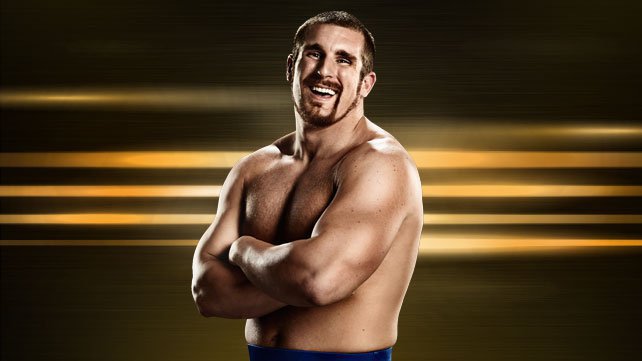
    Staying hyped: Mojo Rawley makes his NXT debut


    After weeks of heavy anticipation, Mojo Rawley has arrived on the WWE NXT scene. The former collegiate standout has had some unique experiences up to this point with an equally compelling outlook on life. Earning a victory in his debut NXT matchup, Mojo has lived up to his self-coined motto: “I don’t get hyped, I stay hyped.” WWE.com takes a deeper look into a story of hard work, sacrifice and positivity as we learn what makes the “hype” behind Mojo Rawley.

    WWE.com: How did you get your start in WWE and NXT?

    MOJO: I was coming off of an injury with the Arizona Cardinals that sidelined me for 18 months. When I healed up, I had some offers on the table to resume my career in the NFL and also had offers to enter the financial services industries with companies such as Merrill Lynch and Morgan Stanley. I ended up getting in touch with WWE through a friend. Being part of WWE was the first thing I ever wanted to do, so I ran with it. When I was offered a contract, I left everything I had ever known and everything I had ever done to start over here.

    WWE.com: Tell us about your football background.

    MOJO: I wasn't recruited to play football out of high school, so I went to Christopher Newport University where I was a two-year starter and captain. I was on a full academic scholarship at CNU, but I ultimately decided I wanted to take a chance at a major Division I school, so I walked on as a defensive lineman at the University of Maryland. I gave up my full academic scholarship to pay $40,000 a year to have a chance at something special. I had to fight extremely hard at Maryland but eventually earned my scholarship and starting position on the team. Eventually I was giving all the pregame speeches every week.

    I was not drafted or immediately signed by the NFL following the draft, but I earned a tryout with the Green Bay Packers. Out of 25 players trying out for the team at their mini-camp, I was one of three who made the team. I later played for the Arizona Cardinals where I was nicknamed “The Iron Sheik” by the team. My playing ability at every level was always summed up as being hard-nosed and very physical, and having a never-ending motor.

    Read Mojo's NXT bio

    WWE.com: You actually attended a pretty famous high school.

    MOJO: Yeah, I was a four-year starter at T.C. Williams High School in Alexandria, Va. T.C. Williams was featured in the movie “Remember the Titans.” My mom works there still to this day and my family all went there. It is a very tight-knit community with a family atmosphere. I actually received an academic scholarship from the 1971 Titans and have a great relationship with the players portrayed in the movie. Coach Boone, Petey and Blue actually came to my college homecoming football game one year to support me. Needless to say, I was so hyped that I had one of my best games!

    WWE.com: We understand academic excellence is always something you strived for?

    MOJO: Academics have always been something I never took lightly. I had the highest GPA on the team every single year of school at all levels and took tremendous pride in that. I was always a part of every major organization on campus and was at least an officer in those organizations.

    WWE.com: You were also the youngest athlete to earn an MBA at the University of Maryland.

    MOJO: I was the youngest person accepted into the program as well. I started working for Morgan Stanley financial services when I was in seventh grade as an intern and ended up staying there. Because of that experience and other qualifications I had, Maryland accepted me as an early admittee to their program. I worked hard to condense the two-year program into a year and a half so I could resume my athletic career. I was actually working on my degree while simultaneously playing in the NFL. My last semester, I took 28 credits so I could finish my degree on top of my football commitments. I remember flying home after making the team in Green Bay and doing homework on the red-eye flight because I had class the next morning.


    View Comments

    Source: http://www.wwe.com/shows/wwenxt/2013-10-16/mojo-rawley
    Related Topics: kenya   Niall Horan   Robocop   Romain Dauriac   Kendra Spears  

    Review: Salt keeps server automation simple


    October 17, 2013


    Like Puppet, Chef, and Ansible, Salt is an open source server management and automation solution with commercial, officially supported options. Based on command-line-driven server and client services and utilities, Salt is primarily focused on Linux and Unix server management, though it offers significant Windows management capabilities as well. While Salt may look simple on its face, it's surprisingly powerful and extensible, and it has been designed to handle extremely large numbers of clients.


    Salt uses a push method of communication with clients by default, though there's also a means to use SSH rather than locally installed clients. Using the default push method, the clients don't actively check in with a master server; rather, the master server reaches out to control or modify each client based on commands issued manually or through scheduling. But again, Salt can also operate in the other direction, with clients querying the master for updates. Salt functions asynchronously, and as such, it's very fast. It also incorporates an asynchronous file server for file deployments.


    [ Review: Ansible orchestration is a veteran Unix admin's dream | Review: Chef cooks up configuration management | Review: Puppet Enterprise 3.0 pulls more strings | Puppet or Chef: The configuration management dilemma | Subscribe to InfoWorld's Data Center newsletter to stay on top of the latest developments. ]


    To continue reading, register here to become an Insider


    It's FREE to join


    Source: http://www.infoworld.com/d/data-center/review-salt-keeps-server-automation-simple-228936?source=rss_infoworld_test_center_articles
    Tags: lauren conrad   Rebel Wilson   abigail breslin   nfl schedule   alyssa milano  

    MotoMaker scores iPhone transfer tool, ships Moto X with your data inside

    Transferring contacts and data to a new phone is always a pain, but Motorola is trying to make the process a little easier. Now, users can order a new Moto X with their existing contacts baked into the phone before it ships, thanks to MotoMaker's new Migrate tool. The migration helper pops up at the ...


    Source: http://feeds.engadget.com/~r/weblogsinc/engadget/~3/fQROSRFbqhE/
    Tags: philadelphia eagles   Don Jon   Obama Syria   Jana Lutteropp   Reza Aslan  

    Asked about Irsay comments, Manning passes

    ENGLEWOOD, Colo. (AP) — Thanks to the musings of his former owner, Peyton Manning's return to Indianapolis this week has turned into something less than the warm-and-fuzzy homecoming it could have been.


    If any of that bothers No. 18, it's not showing.


    Dictating the terms of his Wednesday news conference as effectively as he orchestrates his offense from the line of scrimmage, Manning paid virtually no heed to this week's comments from Colts owner Jim Irsay.


    Manning said he had no comment when asked for his reaction to Irsay's interview earlier this week when he said he had to give up the old Indy offense's "Star Wars" numbers in a quest for more Super Bowl rings.


    On Sunday, Manning returns to Indianapolis for his first game as a visitor.


    ___


    AP NFL website: www.pro32.ap.org


    Source: http://news.yahoo.com/asked-irsay-comments-manning-passes-221623493--spt.html
    Category: brandon marshall   homeland   apple   Jason Dufner   Boston Magazine  

    Alessandra Ambrosio Takes Baby Noah for an Early Morning Orange Juice

    Starting the day with an early-morning pick-me-up of coffee and orange juice, Brazilian beauty Alessandra Ambrosio took her adorable son Noah to Caffe Luxxe this morning (October 16) in Brentwood California.


    The 32-year-old "Angel" made motherhood look sexy, her hair tied back, wearing cute shades, a turquoise and black striped shirt, skinny black leathers, and slip-on shoes. She carried baby Noah in one arm, and held her cup of Joe in the other.


    In related news, Alessandra just came off of a brand new Chanel campaign in Beverly Hills. The featured clothes she wore were described as funky, yet luxurious, featuring logo belts, oversize rings and heaps of necklaces. Alessandra donned everything from polka-dots to the most stylish of overalls.


    Although the 32-year-old stunner was hard at work, that didn't mean she took a break from mommy duties as her daughter Anja accompanied her to the fun outdoor shoot.


    Source: http://celebrity-gossip.net/alessandra-ambrosio/alessandra-ambrosio-takes-baby-noah-early-morning-orange-juice-944053
    Related Topics: new england patriots   catherine zeta jones   drake   irina shayk   Hasnat Khan  

    Avril Lavigne & Chad Kroeger Are Still Lovey Dovey After 94 Days Of Marriage!


    avrilmx015 130617 0015as


    Chad Kroeger has been keeping count of how many days he's been married to Avril Lavigne, and for a good reason!


    The semi-newlyweds tied the knot over the summer and their life has been nothing but martial bliss ever since!


    And with marital bliss comes lessons of how to keep the happiness going!


    The Nickelback frontman gushes about being married to his Rock N Roll wifey, saying:


    “Happy wife, happy life. I think every man learns that quick. Really quick.”


    We all know that a not-so-happy wife equals, well, a not-so-happy hubby!


    LOLz!


    Avril admits the couple rarely bump heads because her hubby is such a sweetie!


    She reveals:


    “He’s such a gentleman, actually, that he’s always like, ‘What do you want to see?’ We watched Harry Potter together.”


    Awh!


    A happy wife and Harry Potter movie nights!


    Here's to many more great moments to the happy couple!!


    [Image via Mavrix Online.]


    Tags: , , , , , , , , ,


    Source: http://perezhilton.com/2013-10-16-avril-lavigne-chad-kroger-married-couple-marital-bliss-94-days-of-marriage-happy-relationship-love
    Category: oarfish   drew brees   veep   liberace   Moto X  

    Wednesday, October 16, 2013

    Hillary Clinton, Ron Perelman Honored at 2013 Elton John AIDS Foundation Benefit


    Source: http://feedproxy.google.com/~r/thr/business/~3/YvsYyvpHuc4/story01.htm
    Similar Articles: suntrust   drew brees   Cloudy With A Chance Of Meatballs 2   Dylan Penn   Jose Iglesias  

    Fox International Channels Unveils New Lifestyle and Reality Programming Division


    TORONTO - FOX International Channels has tapped Real Housewives executive producer Christian Barcellos to head up a new lifestyle and reality series division.


    Barcellos becomes executive vp of lifestyle and reality programming at the global channels unit of Rupert Murdoch's News Corp., overseeing development, production and acquisitions of unscripted programming.


    He will be based in New York City once he takes his post in November, working opposite Sharon Tal Ygaudo on the scripted programming front and reporting to FIC president and CEO Hernan Lopez.


    PHOTOS: Behind-the-Scenes With Reality TV's Top Stars


    The hire comes as FIC looks to ramp up original series development and production for 300-plus international pay TV networks in 181 countries after building out its global footprint.


    The networks and their related mobile and other extensions reach more than 1.6 billion households worldwide.


    “Around the world, the FOX brand is synonymous with original, breakthrough content in entertainment and sports. Now we want to achieve that status with lifestyle and reality programming," Lopez said in a statement.


    The 20th Century Fox unit earlier expanded into sport by launching FIC Sports.


    Now adding lifestyle and reality programming to its entertainment offering, FIC is looking to better position its programming for cable and satellite TV platforms.


    Barcellos most recently served as vp of production and executive producer at Bravo.


    Besides five incarnations of The Real Housewives franchise, including the Atlanta and New Jersey series, his TV credits include Queer Eye for the Straight Guy and Inside the Actors Studio.


    "This is my dream job - working for a visionary company expanding into uncharted territory," Barcellos said in his own statement.


    Before Bravo, Barcellos worked in creative services for Rainbow Media, rising to the creative director post.


    Now with FIC, he will be called on to produce tentpole unscripted franchises ripe for global day-and-date rollouts, much as what happens on the scripted front with series like The Walking Dead, The Bridge and Da Vinci's Demons.


    FIC recently unveiled two new original series in development, Outcast, from The Walking Dead creator Robert Kirkman, and False Flag, a U.S. adaptation of a Israeli scripted drama with Homeland's Keshet International and Parkland’s writer/director Peter Landsman.


    Source: http://feedproxy.google.com/~r/thr/television/~3/brFJD6kYDeM/story01.htm
    Tags: ohio state football   Manny Machado   Talk Like a Pirate Day   GTA 5 review   iOS 7 Beta 4  

    Passengers: Explosion, flames seen on Spirit jet (Providence Journal)

    Share With Friends: Share on FacebookTweet ThisPost to Google-BuzzSend on GmailPost to Linked-InSubscribe to This Feed | Rss To Twitter | Politics - Top Stories News, RSS and RSS Feed via Feedzilla.
    Source: http://news.feedzilla.com/en_us/stories/politics/top-stories/334446292?client_source=feed&format=rss
    Category: chicago marathon   Jimmy Graham   hocus pocus   drew brees   Cloudy With A Chance Of Meatballs 2  

    Starting today, you can preview Flickr's new picture viewer, with a 25% bigger picture that pushes t


    Starting today, you can preview Flickr's new picture viewer, with a 25% bigger picture that pushes the info bar off to the side. It's the latest addition to the full-site redesign from earlier this year. [Flickr Blog via VentureBeat]

    Read more...

    Source: http://gizmodo.com/starting-today-you-can-preview-flickrs-new-picture-vie-1445564963
    Tags: Rashad Johnson   Costa Concordia   Darren Young   robin roberts